

Introduction: The Ocean’s Hidden Chemistry Crisis
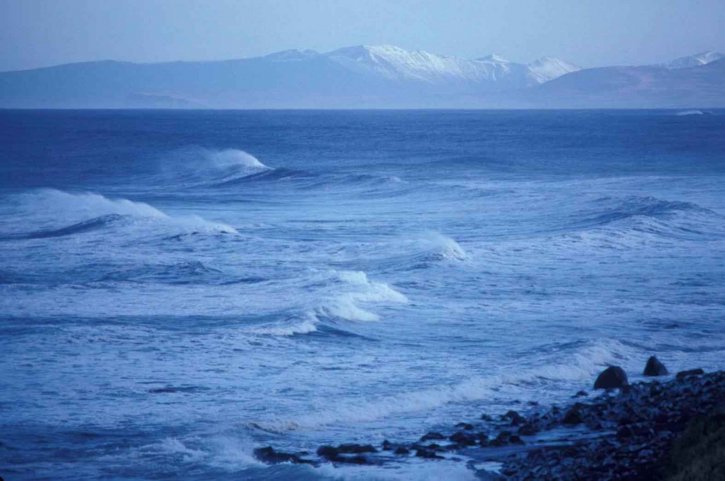
The world’s oceans, covering over $70\%$ of the Earth’s surface, have long been recognized as the planet’s vast, indispensable regulator, playing a critical role in controlling global climate and sustaining an immense, complex web of marine life. For centuries, these enormous bodies of water have acted as a crucial carbon sink, absorbing a significant portion of the carbon dioxide ($CO_2$) released into the atmosphere by natural processes and, more recently, by human industrial activity. This massive absorption capacity has provided an invaluable service, essentially slowing the pace of atmospheric warming and buffering the severity of the climate crisis. However, this beneficial service comes at a profound and largely unforeseen cost to the ocean’s own chemistry and, consequently, to the marine ecosystems that call it home. The continuous, heavy influx of anthropogenic $CO_2$ is fundamentally altering the chemical composition of seawater, driving down its $\mathrm{pH}$ level in a process known as Ocean Acidification.
Ocean Acidification is often termed “the other $CO_2$ problem” because its primary driver is the same as global warming, yet its direct impact is on marine biochemistry rather than temperature alone. When $CO_2$ dissolves in seawater, it initiates a series of chemical reactions that result in an increase in hydrogen ions ($H^+$), which directly lowers the $\mathrm{pH}$ and makes the water more acidic. While the ocean remains technically alkaline (with a $\mathrm{pH}$ above 7), the $\mathrm{pH}$ has already dropped by approximately $0.1$ units since the start of the Industrial Revolution, representing a $30\%$ increase in acidity—a change that is occurring at a speed unprecedented in geological history. This rapid shift in water chemistry poses an existential threat to organisms that rely on carbonate ions to build their skeletons and shells, including crucial species like coral reefs, mollusks, and pteropods, placing the entire marine food web in jeopardy.
This extensive guide will delve into the precise chemistry and mechanisms behind Ocean Acidification, meticulously detailing how the oceans absorb atmospheric $CO_2$ and the resulting chemical cascade. We will explore the critical biological impacts of the decreasing $\mathrm{pH}$, focusing on the devastating consequences for calcifying organismsthat are foundational to ocean health. Finally, we will examine the far-reaching economic and social implications of this chemical crisis and discuss the urgent global mitigation strategies necessary to safeguard the future of marine life and coral reefs.
1. The Chemistry of Carbon Absorption
The process of ocean acidification is a direct consequence of the chemical reaction that occurs when excess atmospheric carbon dioxide dissolves into seawater, fundamentally altering the $\mathrm{pH}$ balance.
The ocean’s helpful absorption of $CO_2$ comes with a steep chemical price.
A. Carbon Dioxide Dissolution
The process begins with Carbon Dioxide Dissolution. $CO_2$ molecules from the atmosphere dissolve and enter the surface ocean water through simple diffusion across the air-sea boundary.
The rate of dissolution is driven primarily by the high concentration of $CO_2$ in the air due to human emissions.
B. Carbonic Acid Formation
Once dissolved, the $CO_2$ immediately reacts with water ($\mathrm{H_2O}$) to form Carbonic Acid Formation($\mathrm{H_2CO_3}$).
This weak acid is the key intermediate molecule that initiates the cascade of acidification.
C. Hydrogen Ion Release
Carbonic acid then dissociates rapidly, releasing a Hydrogen Ion Release ($\mathrm{H^+}$) and forming bicarbonate ions ($\mathrm{HCO_3^-}$).
The increase in $\mathrm{H^+}$ ions is the direct cause of the $\mathrm{pH}$ drop, making the water more acidic.
D. $\mathrm{pH}$ Scale and Acidity
The impact is measured on the $\mathrm{pH}$ Scale and Acidity. The $\mathrm{pH}$ scale is logarithmic, meaning a drop of $0.1$ $\mathrm{pH}$ units represents a $30\%$ increase in hydrogen ion concentration and therefore a $30\%$increase in acidity.
Since the Industrial Revolution, the average ocean surface $\mathrm{pH}$ has dropped from $\approx 8.2$ to $\approx 8.1$, a massive change on a planetary scale.
E. Reduction of Carbonate Ions
The most critical side effect is the Reduction of Carbonate Ions ($\mathrm{CO_3^{2-}}$). The excess hydrogen ions ($\mathrm{H^+}$) react with the available carbonate ions, turning them into more bicarbonate ions.
This chemical conversion removes the carbonate ions that are essential building blocks for marine life.
2. The Biological Impact on Calcifying Organisms
The reduction in carbonate ions is particularly devastating for marine organisms that rely on calcification to build and maintain their hard structures, placing them under extreme physiological stress.
Organisms that build shells and skeletons are the first and hardest hit by acidification.
F. Coral Reef Builders
The most visible victims are Coral Reef Builders. Corals, which are colonial animals, build their massive structures using calcium carbonate ($\mathrm{CaCO_3}$).
Reduced carbonate saturation makes it harder for corals to build their skeletons and can even cause existing skeletons to dissolve.
G. Pteropods and Food Webs
Crucial to food webs are Pteropods and Food Webs. These tiny, swimming sea snails, often called “sea butterflies,” are a major food source for numerous fish, whales, and birds.
Pteropods build thin, delicate shells that are extremely vulnerable to dissolution in acidified waters, threatening the entire Antarctic ecosystem.
H. Mollusks and Shellfish
Mollusks and Shellfish, including oysters, clams, and mussels, struggle to develop their shells in lower $\mathrm{pH}$conditions.
This impacts commercial aquaculture, as reduced larval survival and slower growth rates lead to significant economic losses.
I. Phytoplankton and Coccolithophores
Even the base of the food web is affected, specifically Phytoplankton and Coccolithophores. These single-celled organisms use calcium carbonate to create protective plates.
Ocean acidification impairs their ability to calcify, potentially reducing their populations and disrupting the ocean’s primary productivity.
J. Disrupted Metabolism
Beyond calcification, the increase in $\mathrm{H^+}$ ions causes Disrupted Metabolism in many organisms. Fish, for example, struggle to maintain their internal $\mathrm{pH}$ balance (acid-base homeostasis).
This internal stress can slow growth, reduce reproductive success, and impair neurological functions.
3. Vulnerability of Specific Ecosystems

The severity of ocean acidification is not uniform across the globe; some regions are naturally more vulnerable to the effects of decreasing $\mathrm{pH}$.
Certain ocean areas act as early warning systems for the global crisis.
K. Polar and High-Latitude Waters
Polar and High-Latitude Waters are uniquely vulnerable. Cold water naturally absorbs $CO_2$ more readily than warm water.
Furthermore, these regions often have lower natural carbonate saturation levels, meaning they are the first to reach corrosive conditions.
L. Coastal Upwelling Zones
Coastal Upwelling Zones also face high risk. In these areas, cold, deeper, naturally $CO_2$-rich water is brought to the surface.
When this naturally acidic water is combined with the effects of anthropogenic $CO_2$, surface waters can become highly corrosive, as has been observed along the West Coast of North America.
M. Shallow Water Coral Reefs
Shallow Water Coral Reefs face the combined stresses of acidification and warming. Acidification directly inhibits calcification, while warming causes coral bleaching.
The synergistic effect of these two stressors makes coral reefs one of the world’s most threatened ecosystems.
N. Estuaries and River Mouths
Estuaries and River Mouths are complex zones. They are affected not only by atmospheric $CO_2$ but also by nutrient runoff from land, which can create localized acidification through decomposition.
This double stress further complicates the environment for shellfish farming and coastal fisheries.
4. Synergy with Other Ocean Stressors
Ocean acidification rarely acts alone; its effects are often exacerbated by interacting with other human-induced stressors, creating a compounding crisis for marine life.
Multiple environmental threats combine to weaken the ocean’s resilience.
O. Warming and Metabolic Stress
The interaction between Warming and Metabolic Stress is critical. Higher water temperatures increase the metabolic rates of cold-blooded organisms, demanding more energy.
Ocean acidification simultaneously imposes an energetic cost to maintain internal $\mathrm{pH}$, leaving less energy available for growth and reproduction.
P. Hypoxia (Low Oxygen)
Acidification often occurs alongside Hypoxia (Low Oxygen). Eutrophication (nutrient pollution) fuels algal blooms, and the subsequent decomposition of these blooms consumes large amounts of oxygen.
Many organisms that thrive in acidified waters are also less tolerant of low oxygen levels, squeezing their habitable zones.
Q. Pollution and Contaminants
The presence of Pollution and Contaminants further compromises marine life. Acidified waters can alter the bioavailability and toxicity of heavy metals and other pollutants.
This means that organisms already weakened by acidification may absorb more toxins, increasing mortality rates.
R. Noise Pollution and Behavior
Even Noise Pollution and Behavior can interact with acidification. Studies suggest that fish in acidified water may show altered behavior, potentially affecting their ability to locate predators or prey.
While the exact mechanisms are still being explored, the overall effect is a reduction in ecological fitness.
5. Economic and Societal Repercussions
The chemical crisis in the oceans has profound economic consequences, primarily through the disruption of vital fisheries and the degradation of valuable coastal protection systems.
Ocean acidification is a direct threat to the global blue economy and food security.
S. Fisheries and Aquaculture Collapse
The primary economic impact is Fisheries and Aquaculture Collapse. The difficulty in growing shells directly impacts commercial mollusks and crustaceans.
The collapse of these industries threatens the livelihoods of millions of people who depend on seafood for income and nutrition.
T. Loss of Coastal Protection
The degradation leads to a Loss of Coastal Protection. Healthy coral reefs and calcifying shellfish beds act as natural breakwaters, buffering shorelines from storms and erosion.
The dissolution of these structures increases the vulnerability of coastal communities to rising sea levels and extreme weather.
U. Tourism and Recreation Losses
Tourism and Recreation Losses follow the destruction of major ecosystems. Coral reefs support a massive tourism industry globally.
The degradation of these colorful, biodiverse hotspots leads to significant drops in tourism revenue.
V. Food Security Threat
Ocean acidification presents a serious Food Security Threat, particularly in developing nations. For many coastal communities, shellfish and fish are the primary source of protein.
A decline in these populations threatens to exacerbate malnutrition and poverty.
6. Mitigation and Adaptation Strategies
Addressing ocean acidification requires tackling the root cause—excess atmospheric $CO_2$—while also developing local strategies to help vulnerable ecosystems adapt and cope.
A multi-level approach is necessary to fight both the cause and the effect of the crisis.
W. Global $CO_2$ Emission Reduction
The essential and ultimate solution is Global $CO_2$ Emission Reduction. The only way to stop ocean acidification is to drastically and rapidly curb the release of fossil fuel emissions.
Achieving net-zero global carbon emissions is the single most important action to stabilize ocean chemistry.
X. Local Stressor Reduction
Immediate efforts involve Local Stressor Reduction. Reducing nutrient runoff, sewage discharge, and pollution in coastal zones can mitigate localized acidification effects and reduce metabolic stress on marine life.
Healthier coastal environments are better equipped to withstand the chemical changes from the atmosphere.
Y. Reef Restoration and Resilience
Targeted action focuses on Reef Restoration and Resilience. Scientists are working to identify and selectively breed or genetically modify coral species that show natural resistance to low $\mathrm{pH}$ conditions.
These resilient strains can then be used in active reef restoration projects.
Z. Ocean Alkalinity Enhancement (OAE)
A geoengineering concept is Ocean Alkalinity Enhancement (OAE). OAE involves adding alkaline minerals to the ocean to chemically neutralize some of the acid.
While theoretically effective, OAE is currently highly speculative, expensive, and faces major safety and environmental regulatory concerns.
AA. Aquaculture and Shellfish Hatchery Support
Support is being provided through Aquaculture and Shellfish Hatchery Support. Modern hatcheries use controlled, filtered seawater to raise vulnerable larvae and juveniles in stable $\mathrm{pH}$ conditions.
This buffering protects young organisms during their most sensitive developmental stages before they are released or harvested.
BB. Monitoring Networks
Robust global Monitoring Networks are essential. Programs like the Global Ocean Acidification Observing Network (GOA-ON) continuously track $\mathrm{pH}$, carbonate chemistry, and biological impacts in oceans worldwide.
Accurate, real-time data is vital for informing policy and adapting conservation strategies.
Conclusion: The Urgency of Action
Ocean Acidification presents an unprecedented and silent marine life threat, directly stemming from the ocean’s necessary role as a carbon sink absorbing excess atmospheric $\mathrm{CO_2}$. The subsequent chemical cascade, resulting in a crucial reduction of carbonate ions, imposes severe stress on calcifying organisms, especially vulnerable coral reef builders and key pteropods and food webs.
This environmental crisis has serious fisheries and aquaculture collapse consequences and threatens global food security. Ultimate mitigation demands immediate and drastic global $\mathrm{CO_2}$ emission reduction, while essential short-term solutions include local stressor reduction in coastal areas and reef restoration and resilience efforts.

