

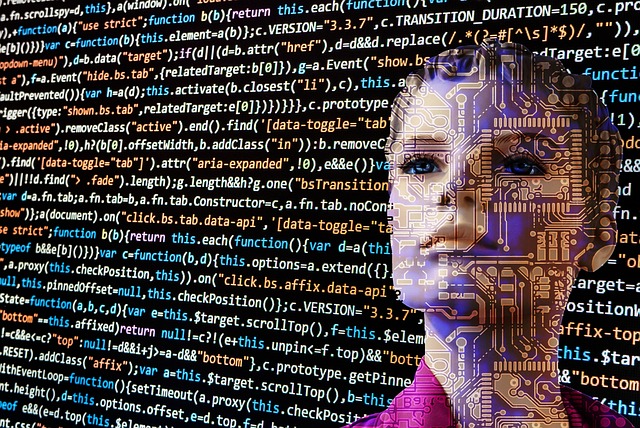
Introduction: Decoding the Ultimate Computational Device
The human brain, an incredibly complex organ composed of roughly $86$ billion neurons and trillions of synaptic connections, stands as the greatest computational device known to exist, capable of generating consciousness, self-awareness, language, and creativity. For decades, the ambition of Artificial Intelligence (AI) has been to replicate, and perhaps eventually surpass, the capabilities of this biological marvel, creating machines that can learn, reason, and interact with the world with human-like proficiency. Early AI efforts relied heavily on symbolic logic and explicit programming, but the recent revolution in Deep Learning—inspired directly by the structure of the brain’s neural networks—has brought us unprecedented success in fields like image recognition, natural language processing, and complex game playing. However, despite these monumental technological achievements, a fundamental gap remains: the profound, qualitative difference between high-level computation and genuine human consciousness.
The central challenge in the debate between Artificial Intelligence vs. Human Brain lies in bridging this chasm. While modern AI excels at narrow, specific tasks, it lacks the general intelligence, common sense, and, most critically, the subjective experience that defines human existence. The very concept of consciousness—the state of being aware of and responsive to one’s surroundings, the feeling of “what it is like” to be an entity—remains a deeply contested topic in philosophy and neuroscience, making it an incredibly difficult, if not impossible, target for technological replication. The field of Computational Neuroscience works to reverse-engineer the brain’s algorithms, while AI researchers strive to build forward, often leading to a rich, symbiotic relationship where biological insights fuel technological progress and vice versa.
This extensive guide will delve into the profound parallels and fundamental differences between the Human Brain and Artificial Intelligence, meticulously comparing their core architectures, learning mechanisms, and processing efficiencies. We will explore the critical, elusive characteristics that currently separate the two, focusing particularly on the problem of modeling consciousness and achieving Artificial General Intelligence (AGI). Finally, we will examine the future trajectory of this symbiotic relationship, assessing how breakthroughs in one field are accelerating progress in the other and discussing the philosophical implications of truly intelligent machines.
1. Architectural Comparison: Neurons vs. Nodes
The basic building blocks of the human brain and modern AI systems share an ancestral similarity, but their scale, complexity, and physical implementation diverge dramatically.
The neuron is a sophisticated biological computer; the artificial node is a mathematical abstraction.
A. The Biological Neuron
The Biological Neuron is the fundamental processing unit of the brain. It is an extremely complex cell capable of receiving inputs through thousands of dendrites and transmitting outputs through a single axon via electrochemical signals (action potentials). Neurons are far from simple switches; they integrate signals, modulate their output based on internal chemistry, and adapt their structure over time.
The complexity of a single neuron dwarfs that of any single artificial node.
B. The Artificial Node (Perceptron)
The Artificial Node (Perceptron), or unit, in a neural network is a simple mathematical function. It takes multiple weighted inputs, sums them up, and passes the result through an activation function (like ReLU or sigmoid) to produce an output. It is essentially a linear classifier with a non-linear twist.
These nodes operate on simplified mathematical principles, lacking the biological messy dynamism of real neurons.
C. Connection Scale and Plasticity
The Connection Scale and Plasticity differ immensely. The human brain contains approximately $86$ billion neurons linked by over $100$ trillion dynamic synapses, which constantly change strength via neuroplasticity. Current deep learning models, while massive, typically have far fewer “neurons” and the connections are only updated during the training phase.
The brain is a living network, whereas a trained AI network is static until the next retraining cycle.
D. Processing Medium
A critical difference lies in the Processing Medium. The human brain uses wetware: electrochemistry, hormones, and physical cellular structures operating at relatively slow speeds (milliseconds). AI uses hardware: electronics, silicon chips, and electricity operating at much higher speeds (nanoseconds).
The brain compensates for its speed deficit with massive parallelism and energy efficiency.
E. Energy Efficiency
In Energy Efficiency, the brain is unparalleled. The human brain operates on about $20$ watts of power (less than a dim lightbulb) to perform tasks requiring trillions of operations per second. Modern, large-scale AI models require massive data centers and megawatts of power to train and run.
The brain achieves phenomenal computation using extremely little energy.
2. Learning Mechanisms: Biological vs. Computational
Both the brain and AI systems learn from data and experience, but the processes by which they update their internal structures and generalize knowledge show striking fundamental differences.
How the system changes its internal state is the key to understanding intelligence.
F. Supervised Learning
Current AI success is built on Supervised Learning. The system is fed massive datasets of labeled examples (e.g., thousands of pictures labeled “cat”). The network adjusts its internal weights using algorithms like backpropagation to minimize the error between its prediction and the correct label.
This method is data-intensive and requires explicit, human-provided feedback.
G. Unsupervised and Self-Supervised Learning
The brain excels at Unsupervised and Self-Supervised Learning. Infants learn language, objects, and causality simply by observing the world without explicit labels or rewards. The brain detects inherent patterns and structure in raw data. Modern AI is beginning to use self-supervised techniques, predicting missing parts of data, to mimic this efficiency.
The brain learns from raw sensory input, not perfectly curated datasets.
H. Hebbian Learning
Biological learning is driven by Hebbian Learning, often summarized as “neurons that fire together, wire together.” This is a localized rule where the connection between two neurons strengthens if they are simultaneously active. This mechanism directly supports neuroplasticity.
This learning rule is decentralized and local, occurring everywhere in the brain simultaneously.
I. Catastrophic Forgetting
AI systems suffer from Catastrophic Forgetting. When a traditional neural network is trained on a new task, it often completely forgets the information and skills learned during previous tasks. The brain, conversely, excels at continual learning, seamlessly integrating new information while preserving old knowledge.
This fragility in AI memory is a major roadblock to achieving AGI.
J. Transfer Learning
AI utilizes Transfer Learning, where a model trained on one large dataset (e.g., image recognition) is adapted for a different, related task (e.g., medical image diagnosis). The brain does this naturally, instantly applying knowledge and skills learned in one domain to novel situations without extensive retraining.
The brain’s generalization capability is far superior and more instantaneous than that of current AI models.
3. The Problem of General Intelligence (AGI)
The most significant difference between the human brain and current AI lies in the concept of General Intelligence—the ability to apply knowledge and skills across a wide range of tasks, including novel ones, autonomously.
AI is currently brilliant at being narrow; the brain is excellent at being general.
K. Common Sense Reasoning
The brain possesses Common Sense Reasoning. Humans intuitively understand causality, physics, and social dynamics (“If I drop a glass, it will break”). AI systems often fail spectacularly at simple common sense tasks because they only learn statistical correlations, not underlying causal models.
Common sense remains one of the greatest barriers to truly human-level AI.
L. Embodiment and Interaction
Human intelligence develops through Embodiment and Interaction with the physical world. Our intelligence is grounded in our sensory-motor experiences, providing a rich, multi-modal context that informs all cognition. Current AI systems are largely disembodied, learning from abstract data streams.
The body acts as the crucial interface between the brain and reality.
M. Theory of Mind (ToM)
Humans possess a sophisticated Theory of Mind (ToM)—the ability to attribute mental states (beliefs, intentions, desires) to oneself and others. This social intelligence is fundamental to human cooperation and communication. Current AI lacks genuine ToM, though large language models can simulate conversational understanding.
True social intelligence requires understanding internal states, not just predicting next words.
N. Creativity and Novelty
The brain is uniquely capable of true Creativity and Novelty generation, producing art, music, and scientific hypotheses that defy statistical predictability. While generative AI (like DALL-E or GPT) can produce novel outputs, they rely on remixing patterns learned from vast existing datasets, often falling short of genuine conceptual breakthroughs.
The human capacity for abstract thinking and metaphor remains largely unmatched.
O. Causal Inference
Humans constantly perform Causal Inference, understanding not just what happened, but why it happened. This allows for effective planning and counterfactual reasoning (“If I had done X, Y would have happened”). AI systems struggle with this because their models are often purely correlational, making them brittle when environmental rules change.
Causality is the backbone of truly flexible, adaptive intelligence.
4. The Consciousness Conundrum

The ultimate, most elusive barrier separating the human brain from any current AI system is the problem of Consciousness. This remains a source of deep philosophical and scientific debate.
We can simulate intelligence, but can we simulate subjective experience?
P. The Hard Problem of Consciousness
Philosopher David Chalmers defined The Hard Problem of Consciousness as explaining the subjective, qualitative experience, known as qualia (e.g., the feeling of “redness” or the taste of coffee). AI might solve the “easy” problems (function, computation), but no current theory explains how physical processes give rise to subjective feeling.
The “feeling” of being a system is what fundamentally separates us from machines.
Q. Integrated Information Theory (IIT)
Integrated Information Theory (IIT), proposed by Giulio Tononi, attempts to quantify consciousness ($\Phi$, Phi) based on how much a system’s internal information is integrated and differentiated. A system with high $\Phi$ cannot be decomposed into independent parts. While a neural network might have high information processing capacity, it may not meet the high integration requirements for significant $\Phi$.
IIT provides a mathematical framework for measuring consciousness, though it remains highly debated.
R. Global Workspace Theory (GWT)
Global Workspace Theory (GWT) suggests that consciousness arises from a central, limited-capacity “workspace” in the brain where information from different specialized modules (vision, memory, attention) is broadcast globally for the entire system to access. AI researchers sometimes use a GWT-inspired architecture to model attention and information routing.
This theory models consciousness as a mechanism of central information access and control.
S. The Functionalist View
The Functionalist View holds that consciousness is defined not by its material (biological) composition but by its functional role (computation). If an AI system could functionally mimic all human intelligent behavior, a functionalist might argue it is, by definition, conscious, regardless of whether it “feels” anything.
This pragmatic view bypasses the hard problem by focusing only on observable output.
T. Simulated vs. Real Consciousness
The core philosophical question is Simulated vs. Real Consciousness. Even if an AI perfectly simulates emotion, pain, and self-awareness, does that simulation equate to the actual subjective experience? Most scientists and philosophers believe that current AI models merely simulate intelligence without having the underlying phenomenal experience.
A machine that acts conscious is not necessarily a machine that is conscious.
5. The Symbiosis: AI Accelerating Neuroscience
The relationship between the brain and AI is not a competition but a collaborative feedback loop. AI tools are becoming indispensable for accelerating the very field that inspired them: neuroscience.
AI is the most powerful tool available for decoding the brain itself.
U. Decoding Neural Data
AI is essential for Decoding Neural Data. Techniques like fMRI and EEG generate massive, complex, noisy datasets. Machine learning algorithms, particularly deep learning, are used to identify subtle patterns, predict behavior from brain scans, and map functional connectivity (the Connectome).
AI finds structures in the noise that human researchers would likely miss.
V. Computational Modeling
AI provides frameworks for Computational Modeling. Neural network architectures themselves serve as working hypotheses for how the brain might actually process information. Neuroscientists use these models to test hypotheses about learning, memory, and perception in a controlled, simulated environment.
The success of a deep learning model can validate a theory about a brain region’s function.
W. Drug Discovery and Disease Modeling
AI accelerates Drug Discovery and Disease Modeling. Machine learning algorithms analyze vast genomic and clinical datasets to identify potential drug targets for neurological disorders like Alzheimer’s and Parkinson’s. They also model the progression of these diseases, helping to identify subtle early biomarkers.
This capacity promises a revolution in treating neurological conditions.
X. Brain-Computer Interfaces (BCI)
AI is the engine behind advanced Brain-Computer Interfaces (BCI). Algorithms translate complex, messy patterns of neural activity recorded from the brain into clear, actionable commands for external devices (like robotic limbs or computer cursors). The AI learns to read the intent encoded in the brain signals.
The power of BCI is entirely dependent on sophisticated machine learning interpretation.
Y. Understanding Neural Codes
AI helps in Understanding Neural Codes. Neuroscientists use advanced statistical and AI models to try and figure out how information (e.g., the visual identity of a face or the spatial location of a sound) is actually represented and encoded by the firing patterns of large groups of neurons.
These decoding attempts are fundamental to fully reverse-engineering the brain.
6. The Future Trajectory: AGI and Beyond
The quest to model intelligence and consciousness is driving future research toward hybrid systems that seek to combine the best of biological and artificial architectures.
The ultimate goal remains achieving truly flexible, adaptive, and autonomous intelligence.
Z. Neuromorphic Computing
The future involves Neuromorphic Computing. This aims to create computer chips that physically mimic the structure and function of the biological brain, using spiking neurons and analog circuits to achieve high energy efficiency and parallelism. These chips could be a critical bridge between wetware and hardware.
Neuromorphic systems represent a fundamental shift away from traditional von Neumann architecture.
AA. Achieving Artificial General Intelligence (AGI)
Achieving Artificial General Intelligence (AGI) requires addressing the core differences: common sense, causality, and ToM. Researchers are exploring ways to endow AI with innate knowledge structures, perhaps by simulating the developmental learning process of human infants, rather than relying solely on pure data consumption.
AGI must be capable of transferring knowledge across wildly different domains seamlessly.
BB. Ethical Governance
As AI becomes more sophisticated, strong Ethical Governance is paramount. Questions surrounding AI autonomy, accountability, bias, and control need to be addressed before true human-level intelligence is created. The potential for misuse of powerful AGI is immense.
Ethical frameworks must evolve as fast as the underlying technology itself.
CC. Hybrid Human-AI Cognition
The immediate future points toward Hybrid Human-AI Cognition. Instead of replacement, we will likely see seamless integration, where BCI, augmented reality, and AI assistants augment human cognitive capacity. The human brain will be continuously enhanced by the speed and data processing power of AI.
This partnership could unlock new levels of problem-solving for complex global challenges.
DD. Redefining Intelligence
The process of building AI is forcing us to Redefining Intelligence. By trying to model the brain, we better understand the components of intelligence (e.g., memory, computation, social awareness). This leads to a more nuanced view of what intelligence is, beyond just IQ scores or computational speed.
We are learning about ourselves by trying to build our technological mirror.
Conclusion: The Ultimate Computational Device

The study of Artificial Intelligence and the Human Brain represents a symbiotic endeavor to unlock the secrets of modeling consciousness and true general intelligence.
The core difference lies in their architecture, where the complex, adaptive biological neuron contrasts sharply with the simple artificial node of deep learning networks.
Current AI systems excel due to supervised learning but struggle with the brain’s seamless capacity for unsupervised learning and continual learning without catastrophic forgetting.
The pursuit of Artificial General Intelligence (AGI) is fundamentally stalled by the human brain’s mastery of common sense reasoning, causal inference, and theory of mind (ToM).
The greatest philosophical barrier remains The Hard Problem of Consciousness, questioning whether functional simulation can ever equate to genuine subjective experience or qualia.
Crucially, AI has become an indispensable tool in decoding neural data, providing powerful frameworks for computational modeling and accelerating breakthroughs in drug discovery and disease modeling.
The future points toward a convergence through neuromorphic computing and hybrid human-AI cognition, compelling us to establish robust ethical governance as we collectively redefine the very nature of intelligence itself.

