

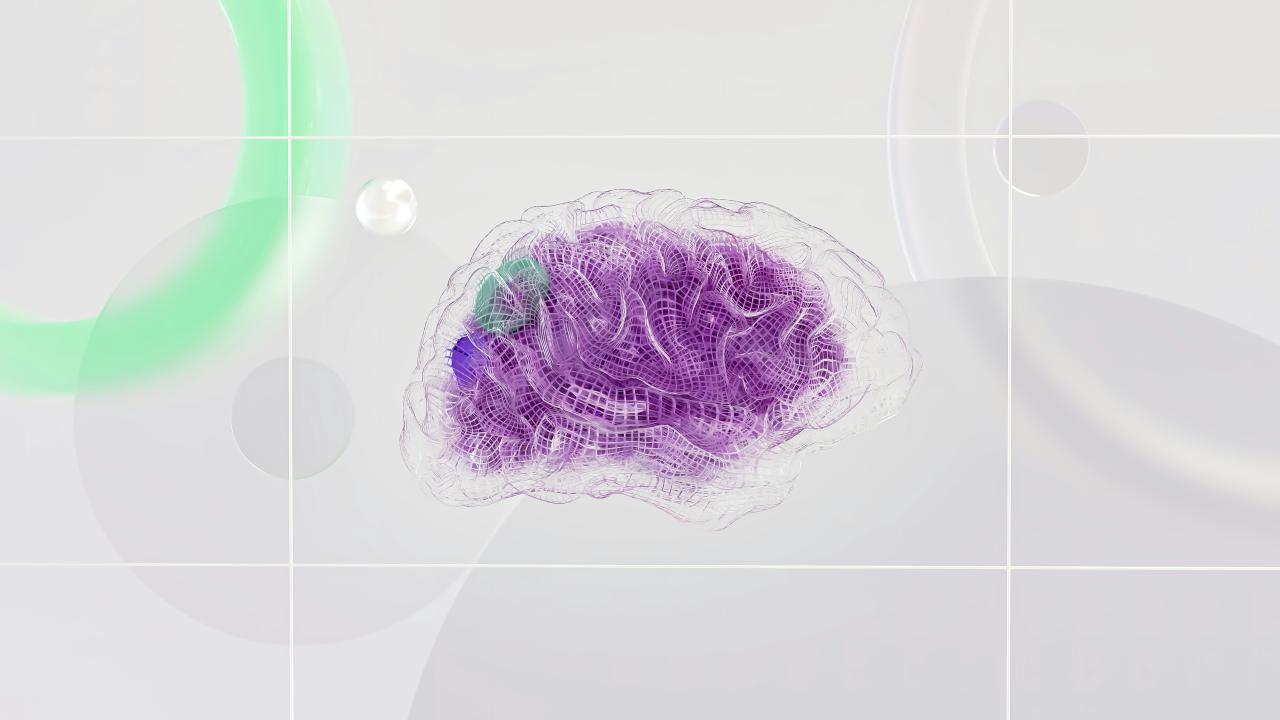
The human brain has often been described as the most sophisticated and complex structure in the known universe, containing roughly 86 billion neurons. For centuries, philosophers and scientists have struggled to understand how this gelatinous mass of tissue generates thoughts, emotions, and the profound sense of self we call consciousness.
We are now living in an era where the dream of seeing the brain’s “wiring diagram” is finally becoming a reality through the ambitious efforts of the Connectome Project. Much like the Human Genome Project revolutionized our understanding of DNA, the Connectome Project seeks to map every single synaptic connection within the human brain. This monumental task involves capturing images at a microscopic scale and using massive supercomputers to trace the intricate paths of neural fibers.
By understanding how different regions of the brain communicate, researchers hope to unlock the secrets of memory, learning, and the origins of mental health disorders. This journey into the inner space of the mind represents the final frontier of human anatomy and biological science. In 2025 and 2026, we are seeing a convergence of high-resolution imaging and artificial intelligence that is accelerating this mapping process at an exponential rate. Understanding the connectome is not just about biology; it is about discovering the physical blueprint of what it means to be human.
A. Defining the Connectome: The Brain’s Electrical Blueprint
The term “connectome” refers to a comprehensive map of the neural connections in an organism’s nervous system. Think of it as a high-definition roadmap that shows every highway, street, and alleyway that electrical signals travel along.
In the past, we only understood the brain in terms of broad regions, such as the frontal lobe or the cerebellum. Now, we are looking at the specific “wires,” known as axons and dendrites, that link these regions together.
A. Macro-connectomes map the long-range connections between major brain structures.
B. Micro-connectomes aim to map every individual synapse between every single neuron.
C. Mesoscale maps look at groups of neurons with similar functions and how they cluster.
D. Structural connectivity refers to the physical anatomy of the neural wires.
E. Functional connectivity measures how different parts of the brain “fire” together during specific tasks.
B. The Technological Engines Behind the Map
Mapping the connectome is a data-heavy challenge that requires the world’s most advanced imaging technologies. We cannot simply use a standard MRI to see individual synapses; we need tools that can see at the nanometer scale.
Diffusion MRI is the primary tool for mapping the macro-scale connectome in living humans. It tracks the movement of water molecules along nerve fibers to visualize the brain’s white matter tracts.
A. Diffusion Tensor Imaging (DTI) allows us to see the orientation of large bundles of axons.
B. Electron Microscopy provides the extreme resolution needed to see individual synapses in brain tissue samples.
C. Serial Block-Face Scanning (SBFSEM) involves slicing a brain sample into thousands of ultra-thin layers for 3D reconstruction.
D. Super-resolution microscopy uses fluorescent markers to bypass the traditional limits of light physics.
E. CLARITY is a chemical process that makes brain tissue transparent, allowing researchers to see deep into the structure without slicing it.
C. The Role of Artificial Intelligence in Neural Tracing
If a human being tried to manually trace every connection in a single cubic millimeter of the brain, it would take several lifetimes. This is why the Connectome Project is fundamentally a “Big Data” project that relies heavily on Artificial Intelligence.
AI algorithms are trained to recognize the boundaries of neurons and follow their long, spindly axons through a forest of other cells. This process, known as automated segmentation, is what makes mapping the entire human brain feasible.
A. Deep learning models can identify synapses with higher accuracy than human observers.
B. Computer vision helps align thousands of 2D images into a perfect 3D digital model.
C. Machine learning predicts the “functional” state of a connection based on its physical shape.
D. Distributed computing allows researchers to process petabytes of brain data across thousands of servers.
E. Open-source platforms allow “citizen scientists” to help check the AI’s work and fix tracing errors.
D. Why Mapping the Wiring Changes Everything
Understanding the brain’s wiring is the key to solving the mystery of “Circuitopathies.” These are disorders that occur not because a specific brain region is damaged, but because the communication between regions is broken.
Conditions like autism, schizophrenia, and depression are increasingly viewed as “mis-wiring” issues. By comparing a patient’s connectome to a “standard” map, doctors can identify exactly where the communication has gone wrong.
A. Connectomics provides a physical basis for diagnosing mental health conditions that were once considered “invisible.”
B. It allows for highly targeted Deep Brain Stimulation (DBS) to fix broken circuits in Parkinson’s disease.
C. Researchers can track how the connectome changes as a child grows or as an elderly person develops dementia.
D. The map reveals how different brains are “wired” for specific talents, such as music or mathematics.
E. Understanding the wiring helps us predict how a brain will recover from a stroke or a traumatic injury.
E. The Dynamic Nature of the Connectome
One of the most fascinating aspects of the human connectome is that it is not static. Unlike the genome, which stays mostly the same throughout your life, your connectome is constantly changing through a process called neuroplasticity.
Every time you learn a new skill or form a memory, you are physically re-wiring your brain. This means your connectome is a physical record of your entire life’s experience.
A. Synaptic pruning is the process where the brain removes unused connections to become more efficient.
B. Long-term potentiation (LTP) strengthens the connections that are used most frequently.
C. Environmental factors, such as stress or exercise, can trigger the growth of new neural pathways.
D. Learning a second language creates massive new “highways” between the auditory and executive centers.
E. Sleep is the critical period when the brain organizes and “solidifies” the day’s wiring changes.
F. From Mice to Men: The Scaling Challenge
Mapping the human connectome is the ultimate goal, but we have to start with smaller organisms. The first connectome ever completed was for a tiny worm called C. elegans, which has only 302 neurons.
[Image comparing the complexity of worm, fly, mouse, and human brains]
In 2024 and 2025, scientists completed the connectome of a fruit fly, which was a massive milestone. Moving to a mouse brain is the next step, followed by the daunting complexity of the human brain.
A. C. elegans was mapped in the 1980s and took over a decade of manual labor.
B. The Fruit Fly (Drosophila) connectome contains roughly 130,000 neurons and tens of millions of synapses.
C. A Mouse brain is roughly 1,000 times larger than a fly’s, requiring exponential increases in storage power.
D. A Human brain is roughly 1,000 times larger than a mouse’s, representing a “Exascale” data challenge.
E. Comparative connectomics helps us see which neural circuits are shared across all mammals.
G. The Data Storage Nightmare of Brain Mapping

To give you an idea of the scale, a high-resolution map of a single human brain would require approximately one zettabyte of data. That is equal to the total amount of data currently flowing through the entire global internet.
Storing and moving this much data requires specialized infrastructure that doesn’t yet exist in the average university lab. This has led to the creation of “Neuromorphic” storage systems designed to handle biological data.
A. Lossless compression algorithms are being developed specifically for 3D neural images.
B. Cloud-based “Brain Atlases” allow researchers from different countries to collaborate on the same dataset.
C. High-speed fiber optic networks are required to move brain samples between imaging centers and data centers.
D. Long-term archival storage is a concern, as we need this data to remain readable for centuries.
E. Energy-efficient supercomputers are needed to prevent the “carbon footprint” of brain mapping from exploding.
H. Connectomics and the Future of AI
The Connectome Project isn’t just helping doctors; it is also providing a blueprint for the next generation of Artificial Intelligence. Current AI is loosely inspired by the brain, but it is very inefficient compared to biological neural networks.
By studying the actual wiring of the human mind, engineers can create “Neuromorphic Chips” that mimic the way neurons process information. This could lead to AI that is more powerful, more creative, and uses significantly less electricity.
A. Sparse connectivity in the brain shows us how to build AI that doesn’t need to “fire” all its neurons at once.
B. Hierarchical processing in the visual cortex is being used to improve image recognition software.
C. Feedback loops in the human connectome are inspiring new types of “Recurrent Neural Networks.”
D. The brain’s ability to learn from a single example (one-shot learning) is the holy grail of modern AI.
E. Studying the connectome might lead to “Artificial General Intelligence” (AGI) that actually thinks like a human.
I. The Ethical Frontier: Who Owns Your Map?
As we get closer to a complete map of the human mind, we must address the ethical implications of this knowledge. If your connectome reveals your predispositions toward certain behaviors or diseases, how should that data be used?
There are concerns about “Neuro-discrimination” by insurance companies or employers. We need to establish a legal framework for “Neural Privacy” before this data becomes mainstream.
A. The right to “Cognitive Liberty” protects individuals from having their brain data mapped without consent.
B. Genetic privacy laws must be expanded to include the structural map of the brain.
C. There is a risk that “Neuro-profiles” could be used to manipulate consumer behavior in the “Neuromarketing” industry.
D. Forensic connectomics could potentially be used in courtrooms to prove a person’s mental state.
E. We must ensure that the benefits of the Connectome Project are shared globally, not just by wealthy nations.
J. Mapping the “Connectome of Aging”
One of the most practical applications of this research is understanding how the brain ages. We all know that memory fades as we get older, but the Connectome Project shows us exactly what is happening to the wires.
In diseases like Alzheimer’s, the connections start to “fray” long before the neurons actually die. If we can detect this fraying early, we might be able to intervene and save the patient’s cognitive function.
A. Early-stage detection of “connectivity loss” could become a standard part of senior health checkups.
B. Brain-training games could be customized to target the specific circuits that are weakening in a patient.
C. Nutritional and lifestyle interventions can be scientifically proven to “strengthen” the connectome.
D. We can see how social isolation physically degrades the wiring of the elderly brain.
E. Reversing the “wiring decay” of old age is a primary goal of the emerging anti-aging industry.
K. Connectomics and Personalized Education
Every brain is wired differently, which means every student learns in a slightly different way. The Connectome Project could lead to a revolution in “Neuro-education.”
By understanding a student’s unique structural and functional connectivity, teachers could tailor their methods to match the student’s natural strengths. This would move us away from a “one-size-fits-all” education system.
A. Visual learners have stronger connections in the occipital and temporal lobes.
B. Students with high mathematical ability often show more robust wiring between the parietal and frontal regions.
C. Identifying “connectivity gaps” early could help children with dyslexia or ADHD get the right support.
D. “Neuro-feedback” tools can help students learn to strengthen their own focus-related circuits.
E. Education could become a lifelong process of “Connectome Optimization.”
L. The Philosophical Impact: Mind vs. Machine
Perhaps the most profound impact of the Connectome Project is philosophical. If we can map every connection that makes up your “self,” does that mean your consciousness is just an electrical algorithm?
This research challenges our ideas about free will, the soul, and the nature of human identity. It forces us to ask: Are we more than the sum of our connections?
A. The “Materialist” view suggests that once we map the connectome, we have explained the entire human experience.
B. Others argue that the “emergent properties” of the brain cannot be understood by looking at the wiring alone.
C. Connectomics provides a scientific bridge between the physical body and the abstract mind.
D. The project may eventually lead to “Whole Brain Emulation,” or uploading a consciousness into a computer.
E. Regardless of the philosophical outcome, the map gives us a deeper appreciation for the beauty of human biology.
Conclusion

The Human Connectome Project is the ultimate map of our internal world.
It represents the most complex engineering challenge humanity has ever faced.
We are finally seeing the physical pathways that allow us to think and feel.
Technology like AI and Electron Microscopy are the modern telescopes for the mind.
This research will turn mental health from a mystery into a manageable science.
Our wiring is not static but a living record of our choices and experiences.
The data generated by this project will fuel the next century of computer science.
We must protect the privacy of our neural maps with strict ethical standards.
Understanding how the brain ages will help us live longer and healthier lives.
Education will be transformed as we learn to teach according to our unique wiring.
The map of the mind is the map of what it truly means to be human.

