

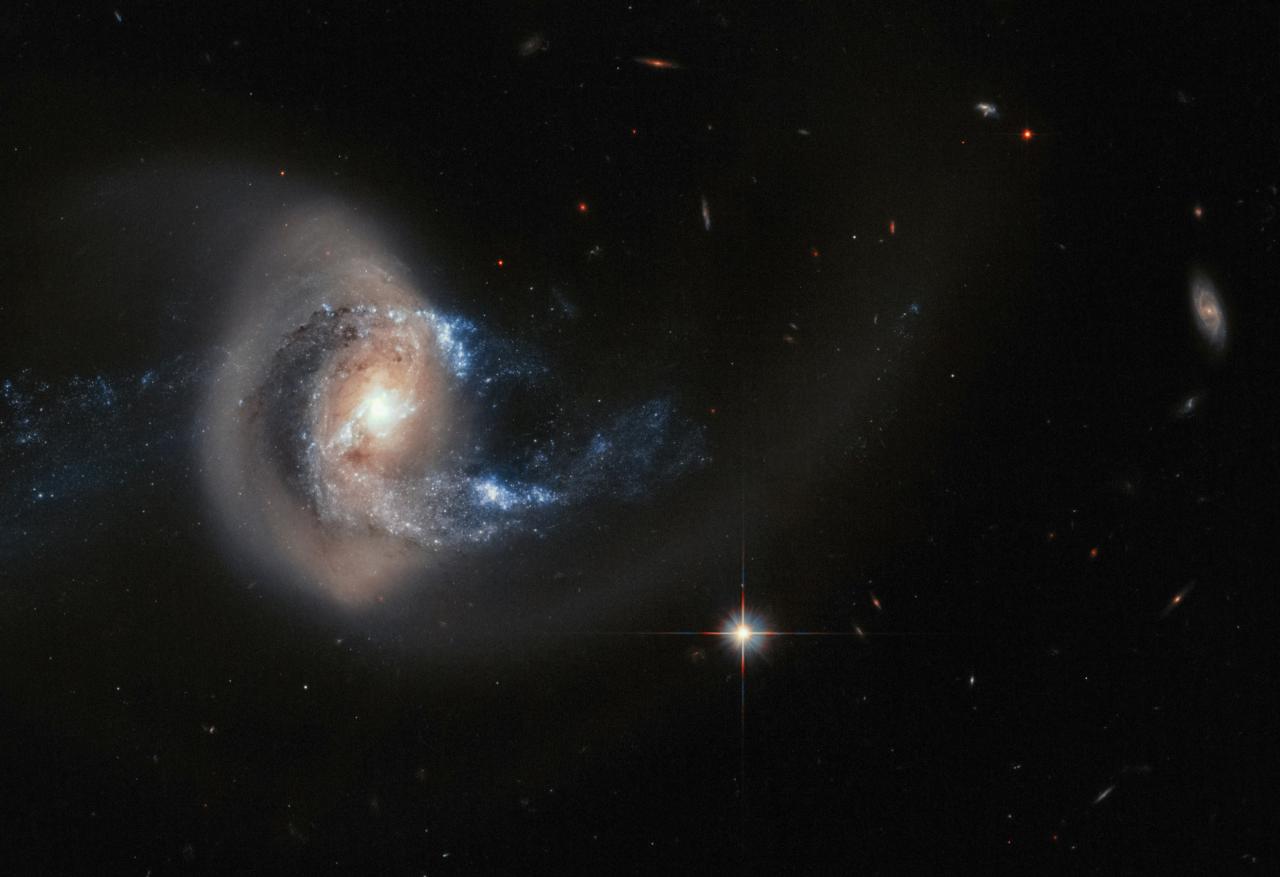
The study of our cosmos has moved far beyond simple stargazing into a complex era of high-precision physics and deep philosophical inquiry. For centuries, humanity looked at the night sky and assumed the heavens were a static, unchanging backdrop to our existence.
However, the discovery that our universe is not only large but actively growing has shattered our fundamental understanding of time and space. This expansion suggests that everything we see today was once compressed into a single, infinitesimal point of infinite density.
As technology advances, we are finally developing the tools necessary to peer back into the earliest moments of creation to witness the birth of light itself. Understanding the rate at which the universe expands is one of the most significant challenges facing modern scientists today.
It involves a delicate dance between visible matter, invisible energy, and the mysterious forces that hold galaxies together. This journey into the unknown is not just about measuring distances; it is about uncovering the ultimate fate of everything that exists.
By unraveling these celestial secrets, we gain a clearer picture of our place in an ever-stretching tapestry of stars and void. This guide will explore the mechanics of cosmic inflation, the hidden players in the shadows, and the incredible theories that define our modern view of the infinite.
The Historical Shift To An Expanding Model

The idea that the universe is growing was once considered a radical fringe theory. It took several major breakthroughs in observation and mathematics to convince the scientific community that the cosmos is dynamic.
A. The Observations Of Edwin Hubble
By analyzing the light from distant galaxies, astronomers noticed a consistent “redshift” in their spectra. This phenomenon indicated that galaxies are moving away from us, with the most distant ones moving the fastest.
B. The Rejection Of The Steady State Theory
Before the expansion was proven, many believed the universe had no beginning or end. The evidence of a growing cosmos eventually led to the widespread acceptance of the Big Bang model.
C. Einstein’s Greatest Blunder
Albert Einstein initially added a “cosmological constant” to his equations to keep the universe static. He later removed it when he realized the universe was indeed expanding, though the concept has recently returned in a new form.
Understanding The Cosmic Microwave Background
To understand how the universe is expanding today, we must look at the “afterglow” of its beginning. This ancient light provides a snapshot of the cosmos when it was only a few hundred thousand years old.
A. The Discovery Of The CMB Radiation
Scientists accidentally discovered a faint hiss of radio noise coming from every direction in the sky. This turned out to be the cooled remains of the first light that ever traveled through space.
B. Mapping Temperature Fluctuations
Detailed maps of this radiation show tiny ripples in temperature. These small differences eventually grew into the massive clusters of galaxies we observe in the modern era.
C. A Window Into The Era Of Recombination
The CMB represents the moment when the universe became cool enough for atoms to form. Before this point, the cosmos was a hot, opaque plasma that trapped all light within itself.
The Mystery Of Dark Matter
Visible stars and planets make up only a tiny fraction of the universe’s total mass. There is a hidden substance that provides the gravitational “glue” needed to hold galaxies together.
A. Calculating Galactic Rotation Curves
Observations showed that the outer edges of galaxies spin much faster than they should based on visible light. This suggests there is a massive amount of invisible matter providing extra gravity.
B. The Hunt For WIMPs and Axions
Scientists are currently searching for hypothetical particles that might explain dark matter. These particles do not interact with light, making them nearly impossible to detect with traditional telescopes.
C. Gravitational Lensing Effects
We can “see” dark matter by observing how its gravity bends the light from distant stars. This effect creates cosmic magnifying glasses that allow us to map the distribution of the unknown.
Dark Energy And Accelerated Expansion
In a surprising twist, scientists discovered that the expansion of the universe is not slowing down; it is actually speeding up. A mysterious force known as dark energy is responsible for this cosmic acceleration.
A. Measuring Distant Type Ia Supernovae
By using exploding stars as “standard candles,” researchers found that distant galaxies are further away than expected. This provided the first direct evidence that some force is pushing space apart.
B. The Role Of Vacuum Energy
One leading theory suggests that dark energy is a fundamental property of space itself. As more space is created through expansion, the total amount of dark energy increases, leading to more push.
C. The Dominance Of The Dark Sector
Current estimates suggest that dark energy makes up roughly sixty-eight percent of the total energy density of the universe. This means the future of the cosmos is controlled by a force we still do not fully understand.
The Life Cycle Of Galaxies
Galaxies are the building blocks of the large-scale structure of the universe. Their birth, growth, and eventual collisions are all dictated by the expansion of the cosmos.
A. Formation From Primordial Gas Clouds
Shortly after the Big Bang, gravity began pulling hydrogen and helium into dense pockets. These clouds eventually ignited to form the first generations of massive, short-lived stars.
B. The Hierarchical Merging Process
Small galaxies frequently collide to form larger ones, such as the massive ellipticals we see today. Our own Milky Way is on a collision course with the nearby Andromeda galaxy.
C. The Impact Of Supermassive Black Holes
Nearly every large galaxy harbors a giant black hole at its center. These gravitational monsters regulate the formation of new stars by blowing hot gas out of the galactic disk.
The Geometry Of Space-Time
The ultimate fate of the universe depends on its overall shape and the density of the matter within it. Mathematics helps us visualize a reality that is difficult for the human mind to grasp.
A. Flat, Open, or Closed Universes
If the universe is “closed,” it will eventually collapse back on itself. If it is “flat” or “open,” it will continue to expand forever, eventually becoming cold and dark.
B. The Critical Density Threshold
The balance between the outward push of expansion and the inward pull of gravity determines the shape of space. Current data suggests our universe is remarkably close to being perfectly flat.
C. The Concept Of Spatial Curvature
Just as a traveler on Earth eventually returns to their starting point, a closed universe would have a finite but boundless volume. Mapping this curvature is a primary goal of modern satellite missions.
Inflationary Theory and the Multiverse
The theory of inflation suggests that the universe underwent a period of exponential growth in the first fraction of a second. This explains why the cosmos looks the same in every direction.
A. Solving The Horizon Problem
Inflation allowed different parts of the universe to exchange information before being pushed far apart. This is why the temperature of the cosmic background radiation is so uniform.
B. Quantum Fluctuations As Seeds Of Structure
During inflation, tiny subatomic jitters were stretched to astronomical scales. These variations became the blueprint for the largest structures in the universe today.
C. The Theoretical Possibility Of Many Universes
Some models of inflation suggest that our universe is just one of many “bubbles” in a larger multiverse. Each bubble might have its own unique laws of physics and constants of nature.
The Hubble Tension Paradox
One of the biggest crises in modern science is the fact that different ways of measuring the expansion rate give different results. This “tension” suggests our current models might be missing something vital.
A. Measurements From The Early Universe
By looking at the cosmic microwave background, scientists calculate a specific rate for the expansion. This number represents how the universe “started” its growth.
B. Measurements From The Local Universe
By looking at nearby stars and supernovae, astronomers get a significantly higher number. This discrepancy is too large to be a simple measurement error.
C. The Search For New Physics
This paradox might mean that dark energy is changing over time or that there are undiscovered particles. Resolving this tension will likely lead to a revolution in our understanding of gravity.
The Ultimate Fate of the Cosmos
As the universe continues to expand, several scenarios describe how everything might end. Each possibility is based on our current understanding of energy and entropy.
A. The Big Freeze or Heat Death
As galaxies move further apart, they will run out of gas to form new stars. The universe will eventually become a cold, dark place where no energy can be exchanged.
B. The Big Rip Scenario
If dark energy becomes strong enough, it could eventually overcome gravity and even subatomic forces. In this terrifying end, everything from galaxies to atoms would be torn apart by space itself.
C. The Big Crunch and Cyclic Models
If there is enough matter, the expansion could eventually stop and reverse. This would lead to a “Big Bounce,” where the universe collapses and then begins a new cycle of expansion.
Black Holes As Cosmic Laboratories
Black holes are the most extreme environments in the universe, where the laws of physics are pushed to their breaking point. They provide a unique window into the nature of space and time.
A. The Event Horizon and Singularity
The edge of a black hole marks the point of no return for light. At the center lies a singularity, where density becomes infinite and our current math ceases to function.
B. Hawking Radiation and Evaporation
Stephen Hawking theorized that black holes are not completely black but emit a tiny amount of radiation. Over immense periods of time, even the largest black holes will eventually evaporate into nothing.
C. The Information Paradox
Scientists are currently debating whether the information that falls into a black hole is lost forever. Solving this puzzle is key to uniting the theories of gravity and quantum mechanics.
The Role of Gravity In Large Scale Structures
Gravity is the architect of the universe, turning a smooth sea of gas into the complex “cosmic web” we see today. This web defines the distribution of matter across billions of light-years.
A. Filaments, Voids, and Superclusters
Galaxies are not scattered randomly but live on long filaments of dark matter. Between these filaments lie vast “voids” where almost no matter exists.
B. The Great Attractor and Local Motion
Our own galaxy is being pulled toward a mysterious region of space known as the Great Attractor. This motion is caused by the gravitational pull of massive unseen structures.
C. Dark Matter Halos As Scaffolding
Visible galaxies are always surrounded by a much larger “halo” of dark matter. These halos act as the gravitational wells that trap gas and allow stars to form in the first place.
The Future Of Space Observation
We are entering a new golden age of astronomy with the launch of next-generation telescopes. These instruments will allow us to see the very first stars and galaxies ever formed.
A. Infrared Vision and Looking Through Dust
Distant light is stretched into the infrared part of the spectrum. New telescopes can see through thick clouds of cosmic dust to witness the birth of solar systems.
B. Gravitational Wave Astronomy
We can now “hear” the universe by detecting ripples in space-time caused by colliding black holes. This provides a completely new way to observe events that emit no light at all.
C. High-Altitude and Space-Based Arrays
By placing telescopes above the Earth’s atmosphere, we can capture images with unprecedented clarity. These missions are essential for measuring the precise rate of the universe’s expansion.
Philosophical Implications Of A Growing Universe
The discovery of an expanding universe has profound effects on how we view our place in time. It raises questions about the uniqueness of our world and the nature of reality.
A. The Anthropic Principle
Some scientists wonder if the laws of physics are “fine-tuned” for life. If the expansion rate were slightly different, stars and planets might never have been able to form.
B. The Finiteness Of The Observable Universe
Because light has a speed limit, we can only see a certain distance. There is likely much more of the universe beyond our “horizon” that we will never be able to observe.
C. The Meaning Of A Beginning In Time
If the universe has a starting point, it implies that time itself might have a beginning. This challenges our traditional notions of cause and effect and the infinite nature of the cosmos.
Conclusion

The expanding universe is the most complex puzzle humanity has ever attempted to solve. Every discovery we make leads to deeper and more profound questions about our origins. The invisible forces of dark matter and dark energy are the true masters of cosmic destiny.
We are currently living in a unique window of time where we can still see other galaxies. In the far future, the expansion will move all other galaxies beyond our observable horizon.
Astronomy is moving from a descriptive science to a highly precise mathematical discipline. The light from the Big Bang still surrounds us, carrying the secrets of the first seconds. Gravity continues to battle against the relentless push of dark energy across the void.
Our understanding of space and time is constantly being rewritten by new observational data. The human mind has proven remarkably capable of grasping the mechanics of the infinite.
Technology is finally catching up to the boldest theories of the past century. Every star we see is a reminder of the incredible journey the universe has taken. The tension between different expansion measurements suggests a revolution in physics is near.
We are part of a cosmic story that began billions of years before our planet existed. The pursuit of knowledge in cosmology is a testament to the curiosity of our species. Take a moment to look at the stars and appreciate the vast, growing reality we inhabit.

