

Introduction: The Final Frontier of Human Biology
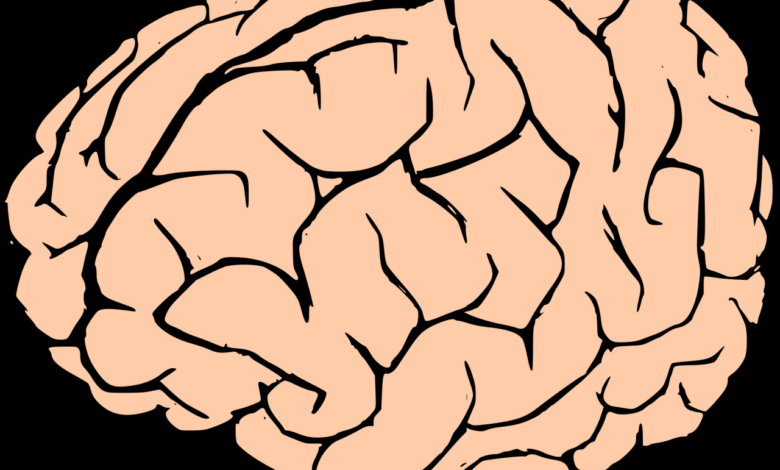
The human brain, an organ weighing barely three pounds, is arguably the most complex and enigmatic structure in the known universe, capable of generating consciousness, memory, emotion, and intellect. Despite millennia of philosophical inquiry and centuries of medical investigation, the precise mechanisms by which billions of neurons interact to create the richness of the human mind remain the final frontier of biological research. For a long time, studying the living, thinking brain was severely limited, often relying on post-mortem examinations or invasive surgical procedures that only provided fragmented glimpses of its function. However, the last few decades have witnessed a revolutionary leap in technology, granting scientists unprecedented, non-invasive access to the brain’s real-time activity, structure, and intricate connectivity.
This technological revolution, spearheaded by advancements in physics and computer science, has given rise to sophisticated brain imaging modalities, fundamentally transforming neuroscience, psychology, and clinical medicine. Techniques like Functional Magnetic Resonance Imaging (fMRI) and Positron Emission Tomography (PET) allow researchers to watch the brain “in action,” identifying which regions are activated during specific tasks, thoughts, or emotional states. Yet, merely localizing function is no longer enough; the cutting edge of research is now focused on Connectomics, the ambitious project of mapping all the neural connections within the brain to create a comprehensive wiring diagram, or the human connectome. This endeavor promises to unlock the secrets behind complex neurological and psychiatric disorders, shifting our understanding of the mind from a collection of isolated regions to a dynamic, interconnected network.
This extensive guide will delve into the cutting-edge methodologies used for mapping the mind, meticulously breaking down the mechanisms and applications of the major structural and functional brain imaging techniques. We will explore the revolutionary field of Connectomics, detailing how advanced imaging and computational power are being combined to chart the brain’s complex circuitry. Finally, we will examine how these breakthroughs in brain imaging and connectomics are transforming the diagnosis, understanding, and treatment of devastating conditions like Alzheimer’s disease, schizophrenia, and depression.
1. Structural Imaging: Defining the Architecture
The first step in understanding the brain is to accurately map its physical architecture, identifying the major anatomical structures, tissues, and any physical abnormalities.
Structural imaging provides the static, high-resolution map of the brain.
A. Magnetic Resonance Imaging (MRI)
The cornerstone of modern structural mapping is Magnetic Resonance Imaging (MRI). MRI uses strong magnetic fields and radio waves to generate detailed cross-sectional images of the brain.
It works by measuring the signals emitted by the hydrogen nuclei in water molecules after they are aligned by the magnetic field and excited by radiofrequency pulses.




B. T1 and T2 Weighting
MRI utilizes different settings, known as T1 and T2 Weighting, to differentiate tissues. T1-weighted images are excellent for distinguishing between gray matter (neuron cell bodies), white matter (axons), and cerebrospinal fluid (CSF).
T2-weighted images are typically used to highlight pathological changes, such as inflammation or edema.
C. Computed Tomography (CT)
Computed Tomography (CT), though older, remains important for rapid structural assessment. CT uses X-rays rotated around the patient to create cross-sectional images.
It is particularly fast and effective for diagnosing acute conditions like hemorrhages, fractures, or major strokes.
D. Measuring Tissue Volume
These structural maps are used for Measuring Tissue Volume. Quantitative analysis of MRI scans allows researchers to precisely measure the volume, thickness, and integrity of specific cortical regions.
Changes in these measurements often serve as early biomarkers for neurodegenerative diseases like Alzheimer’s.
E. Identifying Lesions
Clinically, structural imaging is vital for Identifying Lesions. It clearly shows tumors, vascular abnormalities, infectious abscesses, and regions of tissue damage caused by trauma or stroke.
Precise localization of these abnormalities guides surgical and radiation planning.
2. Functional Imaging: Watching the Brain in Action
Functional imaging techniques revolutionized neuroscience by allowing researchers to monitor brain activity as it occurs, linking specific tasks or stimuli to neural responses.
Functional imaging translates blood flow and metabolism into a map of neural activity.
F. Functional Magnetic Resonance Imaging (fMRI)
The gold standard is Functional Magnetic Resonance Imaging (fMRI). fMRI measures the Blood-Oxygen-Level Dependent (BOLD) signal, which tracks changes in blood flow and oxygenation.
When a brain region is active, it consumes more oxygen and receives an influx of oxygenated blood, which produces the BOLD signal detected by the scanner.
G. High Spatial Resolution
fMRI offers High Spatial Resolution. It can localize brain activity down to a few millimeters, making it excellent for identifying the specific brain areas involved in cognitive tasks like language processing or decision-making.
However, its temporal resolution (speed) is limited because the BOLD response is slow, lagging several seconds behind the actual neural firing.
H. Positron Emission Tomography (PET)
Positron Emission Tomography (PET) uses radioactive tracers to map metabolic activity. A tracer, often fluorodeoxyglucose (FDG), is injected and accumulates in metabolically active brain regions.
PET provides excellent information on brain metabolism, neurotransmitter systems, and receptor density.
I. Clinical Use of PET
The Clinical Use of PET includes assessing neurodegenerative disorders. FDG-PET can detect subtle reductions in glucose metabolism characteristic of Alzheimer’s disease earlier than structural changes appear on MRI.
Newer PET tracers specifically bind to amyloid plaques and tau tangles, the pathological hallmarks of Alzheimer’s.
J. Electroencephalography (EEG) and MEG
Electroencephalography (EEG) and Magnetoencephalography (MEG) offer unmatched temporal resolution. EEG measures electrical activity directly from the scalp, while MEG measures the magnetic fields generated by neuronal currents.
These methods are essential for studying the rapid dynamics of brain activity, such as sleep stages, seizures, and the timing of cognitive processing.
3. Diffusion Tensor Imaging and the Connectome
Moving beyond structure and function, the field of Connectomics seeks to map the brain’s white matter tracts—the complex network of connections that link different brain regions.
The connectome is the brain’s ultimate wiring diagram.
K. Diffusion Tensor Imaging (DTI)
The primary tool for mapping connectivity is Diffusion Tensor Imaging (DTI). DTI is a specialized form of MRI that measures the diffusion of water molecules in the brain.
In white matter, water diffuses preferentially along the direction of the myelinated axons.
L. Tractography
DTI data is used to perform Tractography. Computational algorithms use the direction of water diffusion to reconstruct the three-dimensional pathways of major white matter tracts (bundles of axons).
Tractography reveals the structural connections that form the brain’s “highways.”
M. Functional Connectivity
Alongside DTI, Functional Connectivity is mapped using resting-state fMRI. This technique measures the temporal correlations between the BOLD signals of anatomically distinct brain regions while the subject is at rest.
Regions that show synchronized activity are considered functionally connected, suggesting they belong to the same neural network.
N. The Human Connectome Project (HCP)
A colossal effort is The Human Connectome Project (HCP). This international initiative aims to collect and analyze comprehensive structural, functional, and connectivity data from thousands of healthy human subjects.
The goal is to provide a reference map for the healthy human connectome.
O. Network Analysis and Graph Theory
The complex data generated by DTI and fMRI is analyzed using Network Analysis and Graph Theory. Brain networks are modeled as mathematical graphs, where brain regions are “nodes” and connections are “edges.”
This analysis allows researchers to identify highly connected hubs, measure network efficiency, and locate vulnerabilities.
4. Connectomics and Neurological Disorders
The paradigm shift from localization to network analysis is transforming our understanding of neurological and psychiatric diseases, revealing them as disorders of connectivity rather than just regional damage.
Many brain disorders are now viewed as network diseases.
P. Alzheimer’s Disease (AD)
In Alzheimer’s Disease (AD), connectomics reveals early network breakdown. AD is characterized by early functional disconnections in the default mode network (DMN), a network active during rest and self-referential thought.
Structural DTI analysis shows the degradation of white matter tracts connecting memory centers, well before severe cognitive decline.
Q. Schizophrenia
Schizophrenia is increasingly understood as a disconnectivity syndrome. Studies show reduced connectivity efficiency, particularly in the frontal and temporal lobes, which are critical for executive function and auditory processing.
These structural and functional anomalies align with the disorder’s hallmark symptoms of cognitive impairment and hallucinations.
R. Autism Spectrum Disorder (ASD)
Autism Spectrum Disorder (ASD) shows complex, heterogeneous connectivity patterns. Some studies suggest local over-connectivity (too many connections within a small region) combined with long-range under-connectivity (too few connections between distant regions).
This imbalance may contribute to the intense focus on specific details and the difficulty in integrating complex information.
S. Traumatic Brain Injury (TBI)
Connectomics is crucial for assessing Traumatic Brain Injury (TBI). Even mild TBI can cause microscopic damage (diffuse axonal injury) to white matter tracts that is invisible on conventional MRI.
DTI can quantify the extent of this white matter damage, providing a better prognostic marker than traditional structural imaging.
T. Depression and Mood Disorders
In Depression and Mood Disorders, functional connectivity is often altered in circuits related to emotion regulation and reward. Research consistently shows abnormal communication between the prefrontal cortex (PFC) and the limbic system (emotion centers).
Identifying these network signatures helps predict treatment response to different therapies.
5. Advancing the Imaging Frontier
Researchers are continually pushing the limits of resolution, speed, and specificity, developing next-generation imaging techniques that promise even deeper insights into neural activity.
The technology for mapping the mind is evolving at breakneck speed.
U. Ultra-High Field MRI (7T and Higher)
Ultra-High Field MRI (7T and Higher) uses significantly stronger magnets than clinical scanners ($1.5T$ or $3T$). Stronger magnets dramatically increase the signal-to-noise ratio.
This allows for unprecedented spatial resolution, enabling scientists to resolve fine details of cortical layers and small nuclei deep within the brain.
V. Optical Imaging and Microscopy
Optical Imaging and Microscopy are being used in animal models to study neural activity at the cellular level. Techniques like two-photon microscopy allow researchers to monitor the activity of individual neurons using fluorescent reporters.
Though invasive, these methods provide ground truth validation for non-invasive human imaging findings.
W. Simultaneous EEG-fMRI
Combining techniques offers powerful complementary data, particularly Simultaneous EEG-fMRI. EEG provides the rapid temporal information, while fMRI provides the precise spatial localization of the neural activity.
This combination is invaluable for studying epileptic seizures and real-time brain dynamics during sensory tasks.
X. Functional Near-Infrared Spectroscopy (fNIRS)
Functional Near-Infrared Spectroscopy (fNIRS) is a non-invasive, portable, and low-cost alternative to fMRI. fNIRS uses light absorption to measure blood oxygenation changes near the cortical surface.
Its portability makes it ideal for studying brain activity in natural, real-world settings or with populations like infants that cannot be scanned in an fMRI machine.
6. The Ethical and Future Challenges
As the ability to read and interpret the brain’s activities and connections becomes more sophisticated, critical ethical and technological hurdles must be addressed.
With great power to map the mind comes great responsibility to govern its use.
Y. Neuroethics and Privacy
The rapid advancement necessitates a focus on Neuroethics and Privacy. Detailed connectomic data is highly individual and sensitive, potentially revealing predispositions to certain mental illnesses or cognitive traits.
Robust legal and ethical frameworks are required to protect this highly personal neural information.
Z. Data Sharing and Standardization
The field faces challenges in Data Sharing and Standardization. Integrating and comparing massive datasets from different labs and different scanners requires universal protocols and formats.
Initiatives like the HCP promote open science and unified data standards to maximize scientific collaboration.
AA. Personalized Treatment Models
The ultimate goal is the creation of Personalized Treatment Models. By identifying a patient’s unique connectomic “fingerprint” of their disorder, doctors can move towards precisely tailored interventions.
For example, a specific pattern of reduced functional connectivity might indicate a patient will respond better to cognitive behavioral therapy than medication.
BB. Brain-Computer Interfaces (BCI)
The convergence of imaging and technology drives Brain-Computer Interfaces (BCI). High-resolution imaging is key to developing better BCI devices that can interpret neural commands and restore motor or communication function.
The mapping of motor and cognitive networks is foundational for successful BCI development.
CC. Reverse Engineering the Brain
Connectomics brings us closer to Reverse Engineering the Brain. By fully mapping the structure and function of simpler model organisms and eventually the human brain, scientists aim to create complex simulations.
This ambitious goal could unlock the principles of biological intelligence and transform artificial intelligence.
Conclusion: Decoding the Mind’s Network
Brain Mapping has fundamentally transformed our understanding of the central nervous system, utilizing powerful tools like Magnetic Resonance Imaging (MRI) to define structure and Functional Magnetic Resonance Imaging (fMRI) to observe activity. The frontier now lies in Connectomics, the ambitious project of reconstructing the brain’s full white matter tracts and functional connectivity using techniques like Diffusion Tensor Imaging (DTI).
This shift to a network perspective has revolutionized how we view disorders, revealing that diseases like Alzheimer’s Disease (AD)and schizophrenia are essentially network malfunctions. The ongoing development of ultra-high field MRI (7T and higher) and the combination of modalities like simultaneous EEG-fMRI promise even greater resolution and temporal precision.