


Introduction: The Hidden Machinery of Human Choice
Every moment of our lives, from the mundane choice of what to eat for breakfast to the critical decision of a career path or a financial investment, is the culmination of complex, lightning-fast computational processes occurring within our brains. These constant choices define our actions, our personality, and our journey through the world, yet they all stem from the seemingly simple interactions of billions of specialized cells called neurons. For centuries, the process of decision-making was considered the sole domain of abstract philosophy or psychology, viewed as a purely rational or conscious exercise of the human will. However, modern neuroscience has brought this ethereal process down to earth, revealing it to be fundamentally rooted in precise, measurable electrochemical dynamics—the continuous interplay of electrical signals and chemical messengers across vast neural networks.
The transition from a basic neural input to a deliberate, conscious thought or action is a masterpiece of biological engineering, involving sophisticated integration, weighting, and balancing of competing information streams. This system must rapidly assess sensory data, retrieve relevant memories, predict future consequences, and incorporate emotional significance, all before generating the final command. The core mechanism enabling this entire computational cascade is the action potential, a sudden electrical impulse that allows neurons to communicate instantly across long distances, modulated by a rich soup of neurotransmitters that tune the signal’s strength and impact. Understanding the electrochemical basis of decision making means delving deep into the specialized brain regions involved, from the reflexive circuits of the amygdala to the deliberative reasoning capabilities of the prefrontal cortex.
This extensive guide will meticulously explore the fundamental electrochemical principles that govern neuronal communication, detailing how action potentials are generated and how chemical messengers shape the flow of information. We will then journey through the neural circuits of choice, examining the specific brain regions—especially the prefrontal cortex, parietal cortex, and basal ganglia—that work together to collect, weigh, and commit to a decision. Most importantly, we will establish how these biological mechanisms are not purely rational, but are profoundly influenced by emotion, risk perception, and internal states, demonstrating that every conscious choice is, at its heart, an electrochemical event shaped by a lifetime of experience.
1. The Elementary Language of Neurons
The foundation of all thought and decision-making rests upon the ability of individual neurons to generate and transmit signals. This transmission is a two-part process: electrical transmission within the neuron and chemical transmission between neurons.
The language of the brain is a rapid exchange of electricity and chemistry.
A. Resting Membrane Potential
Every neuron maintains a stable electrical charge difference across its membrane, known as the Resting Membrane Potential. This potential, typically around $-70$ millivolts, is achieved by maintaining a high concentration of potassium ions inside the cell and high concentrations of sodium and chloride ions outside the cell. Specialized protein structures called ion pumps and ion channels maintain this crucial electrochemical gradient.
The resting potential ensures the neuron is primed and ready to fire an electrical signal at a moment’s notice.






B. The Action Potential
The fundamental electrical signal is the Action Potential, often referred to as a “spike” or “firing.” This is a rapid, transient, and large change in the membrane voltage. It occurs when a neuron receives enough excitatory input to reach a critical threshold (usually around $-55$ mV), causing voltage-gated sodium channels to suddenly open.
The action potential is an all-or-nothing event; once the threshold is crossed, the signal fires with full strength, ensuring reliable long-distance communication.
C. Electrical to Chemical Conversion
Once the action potential travels down the axon to the axon terminal, the electrical signal must be converted into a chemical one to cross the synapse. The voltage change at the terminal causes voltage-gated calcium channels to open. Calcium influx triggers the release of neurotransmitters into the synaptic cleft.
This conversion is the critical moment where information is passed from one neuron to the next.
D. The Synapse: Chemical Communication
The Synapse is the tiny gap where chemical communication occurs. Neurotransmitters bind to specialized receptor proteins on the postsynaptic neuron’s membrane. This binding causes ion channels on the postsynaptic neuron to open, leading to small electrical changes called postsynaptic potentials (PSPs).
The effect can be either excitatory (pushing the postsynaptic neuron toward its firing threshold) or inhibitory (pushing it away from the threshold).
E. Integration and Summation
The receiving neuron constantly performs Integration and Summation. A single neuron may receive thousands of inputs simultaneously—some excitatory, some inhibitory. The neuron adds up (sums) all these incoming PSPs across its entire surface.
The final decision to fire an action potential is based on whether the total summed input is strong enough to cross the $-55$ mV threshold at the axon hillock.
2. Neurotransmitters: Tuning the Decision Process
The efficiency and tone of the information flow are regulated by a diverse cast of neurotransmitters. These chemical messengers don’t just transmit signals; they tune the network’s excitability, influence mood, and prioritize specific pathways.
Neurotransmitters are the subtle modulators that define our feeling and focus.
F. Glutamate (The Exciter)
Glutamate is the primary excitatory neurotransmitter in the brain. It is responsible for fast signaling and plays a crucial role in synaptic plasticity (the mechanism of learning and memory). Glutamate-mediated pathways are essential for quick processing of sensory input and rapid response generation.
Its continuous activity underlies most of the brain’s baseline informational transfer.
G. GABA (The Inhibitor)
GABA (gamma-aminobutyric acid) is the primary inhibitory neurotransmitter. It acts to stabilize the neural network, preventing runaway excitation or epileptic activity. In decision-making, GABA fine-tunes the process by suppressing irrelevant signals and sharpening the focus on the most important pathways.
GABA helps to quiet the noise, ensuring that only the strongest, most relevant signal wins the competition.
H. Dopamine (Reward and Motivation)
Dopamine is critical for Reward and Motivation. It is not the “pleasure” chemical itself, but rather the signal for salience and prediction error (the difference between expected and actual reward). Dopaminergic pathways strongly influence choices by signaling the perceived value and expected benefit of an action.
Choices associated with a strong dopamine burst are more likely to be repeated, driving goal-directed behavior.
I. Serotonin (Mood and Social Behavior)
Serotonin is heavily involved in Mood and Social Behavior. It influences risk assessment, impulsive behavior, and emotional stability. Low serotonin levels have been linked to increased impulsivity and an inability to correctly assess long-term consequences, skewing the delicate balance of choice.
Serotonin helps to stabilize the system, promoting cautious, well-considered choices over rash ones.
J. Norepinephrine (Arousal and Attention)
Norepinephrine (or noradrenaline) regulates Arousal and Attention. Released widely throughout the cortex, it signals states of vigilance and stress, ensuring that important information is prioritized. Under high stress, norepinephrine can bias decision-making towards rapid, reactive choices over slow, deliberate ones.
This neurotransmitter prepares the brain to act quickly in response to perceived environmental demands.
3. The Neural Circuitry of Choice: Brain Regions
Decision-making is not localized to a single “thought center”; it is a distributed process involving the coordinated communication between several highly specialized brain regions that handle different aspects of the process, from valuation to execution.
The final choice is the result of a coordinated neural negotiation.
K. Prefrontal Cortex (PFC)
The Prefrontal Cortex (PFC), particularly the dorsolateral and ventromedial regions, is the executive hub of decision-making. It is responsible for high-level cognitive functions, including weighing pros and cons, planning, predicting future outcomes, and suppressing impulsive actions. This area holds the long-term goals.
The PFC is the rational calculator, integrating abstract value and consequence.
L. Ventromedial Prefrontal Cortex (vmPFC)
The Ventromedial Prefrontal Cortex (vmPFC) plays a critical role in assigning Subjective Value. It integrates emotional signals from the limbic system (like the amygdala) with factual data, providing an overall “gut feeling” or affective estimate of the worth of a choice. Damage to the vmPFC severely impairs realistic decision-making, even if logic remains intact.
This region determines how much you care about the outcome, regardless of objective value.
M. Striatum and Basal Ganglia
The Striatum and Basal Ganglia are crucial for Action Selection and Habit Formation. The basal ganglia act as a gatekeeper, constantly receiving signals about potential actions and using dopaminergic input to decide which action “wins” the competition and should be executed. This circuit reinforces beneficial choices.
The basal ganglia translate the cortical decision into a motor command, often based on learned routines.
N. Amygdala
The Amygdala is the primary processing center for Emotion and Fear. It quickly assesses the emotional relevance and potential danger of a situation. Its inputs can rapidly override slower PFC processing, leading to reflexive or fear-driven decisions, often observed in high-stakes situations.
The amygdala provides the initial, fast warning system that colors all subsequent deliberation.
O. Parietal Cortex
The Parietal Cortex is involved in integrating sensory information and, critically, accumulating evidence. Research suggests that in perceptual decision-making (e.g., detecting a faint stimulus), neurons in the parietal cortex accumulate evidence over time until a threshold is reached, signaling the final choice.
This area acts as a biological stopwatch and accumulator for incoming data.
4. Electrochemical Dynamics of Risk and Reward
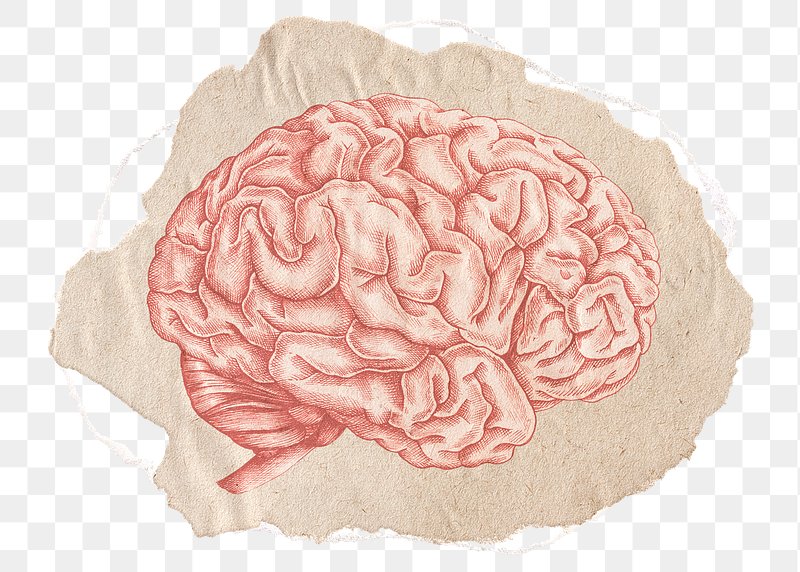
Decision-making under uncertainty—which constitutes most of human choice—is heavily influenced by how the brain processes risk and reward. This valuation process is a prime example of electrochemical systems at work.
The brain weighs potential gain against potential loss in milliseconds.
P. Reward Prediction Error (RPE)
The key dopaminergic mechanism is the Reward Prediction Error (RPE). When the actual reward is better than expected, dopamine neurons fire strongly (positive RPE), strengthening the neural circuit that led to the action. If the reward is worse than expected, dopamine signaling dips (negative RPE), weakening the circuit.
RPE is the brain’s internal teaching signal, constantly updating the value of choices.
Q. Neural Encoding of Risk
The Neural Encoding of Risk involves specific regions, including the anterior insula and the amygdala. The insula becomes active when a choice involves uncertainty or potential loss, often associated with subjective feelings of anxiety or discomfort. Higher activity here biases the choice towards safety.
Risk aversion is often a measurable, electrochemical response in the insula.
R. Intertemporal Choice
Intertemporal Choice involves decisions between immediate rewards and future, larger rewards (e.g., saving money vs. spending now). The immediate reward system relies more heavily on the limbic and dopaminergic pathways, while the patient, long-term choice relies more on the rational control of the PFC.
The ongoing battle between instant gratification and delayed reward is a neural tug-of-war.
S. Role of Neuromodulators
Diffuse Role of Neuromodulators like Acetylcholine and Histamine further tune this process. Acetylcholine enhances cortical alertness and memory encoding, allowing for more detailed processing of complex options. Histamine helps regulate the sleep-wake cycle, ensuring peak cognitive performance during periods when important decisions must be made.
These global chemical systems set the stage for optimal (or sub-optimal) deliberation.
5. From Deliberation to Action: The Execution Phase
Once the neural negotiation is complete and the decision threshold is crossed, the brain must translate the abstract choice into concrete motor commands, again relying on electrochemical signaling.
The final burst of spikes is the moment of commitment.
T. Commitment and Threshold
The moment of Commitment and Threshold crossing is often associated with the reaching of a critical firing rate in the parietal and prefrontal regions. This sustained, high-frequency firing signals that the brain has gathered sufficient evidence or achieved sufficient value weighting to end the deliberation phase.
This electrochemical threshold represents the point of no return for the decision.
U. Motor Planning
The decision is rapidly passed to regions responsible for Motor Planning, primarily the Premotor Cortex and the Supplementary Motor Area (SMA). These areas translate the abstract intent (e.g., “I will pick up the cup”) into a complex sequence of muscle commands. This plan is run and refined internally before execution.
Motor planning ensures that the final action is smooth, efficient, and appropriate for the context.
V. The Role of the Cerebellum
The Role of the Cerebellum is to fine-tune the motor command in real-time, ensuring coordination, precision, and balance during execution. While not initiating the decision, the cerebellum provides the necessary calculation to execute the chosen action accurately.
The cerebellum is the error-correction system for the final command execution.
W. Feedback and Learning
Every action creates Feedback and Learning. Sensory data (seeing the result, feeling the consequence) is immediately sent back to the PFC and the basal ganglia, generating a new Reward Prediction Error signal. This RPE updates the value of the choice, thereby modifying the circuits for future, similar decisions.
This closed-loop system ensures that our decision-making capacity continuously improves throughout our lives.
6. Clinical and Future Implications
Understanding the electrochemical basis of choice has immense implications for treating neurological and psychiatric conditions where decision-making is impaired, such as addiction, impulsivity disorders, and depression.
Translating basic science into clinical tools is the next great frontier.
X. Addiction and Compulsive Choice
Addiction and Compulsive Choice are characterized by pathological hijacking of the dopaminergic reward pathways. The brain’s value system is skewed, assigning extremely high value to the addictive substance while weakening the inhibitory control exerted by the PFC.
Treatment aims to chemically or behaviorally restore the balance between reward and inhibition.
Y. Impulsivity and PFC Dysfunction
Impulsivity and PFC Dysfunction are often linked to a chemical imbalance where the inhibitory control from the PFC is insufficient to suppress limbic system demands. Conditions like ADHD involve deficits in norepinephrine and dopamine signaling, leading to an inability to sustain attention and weigh long-term consequences.
Pharmacological treatments often target the restoration of PFC control over immediate urges.
Z. Neuromodulation Therapy
New technologies focus on Neuromodulation Therapy. Techniques like Deep Brain Stimulation (DBS) or Transcranial Magnetic Stimulation (TMS) are used to directly stimulate or inhibit specific decision-making nodes, such as the basal ganglia or the PFC, to correct pathological firing patterns.
These tools offer a direct way to chemically and electrically tune the brain’s decision circuits.
AA. Computational Psychiatry
The rise of Computational Psychiatry uses electrochemical models of decision-making to better diagnose and treat mental illness. By observing a patient’s choices in laboratory tasks, researchers can reverse-engineer the underlying RPE or risk-encoding parameters, leading to highly personalized treatment.
This field seeks to define mental illness not just by symptoms, but by quantifiable electrochemical algorithms.
BB. Ethical Considerations
The detailed understanding of decision circuits raises profound Ethical Considerations. As we gain the ability to predict and even manipulate the chemical basis of choice, questions arise regarding free will, responsibility, and the use of neuromodulators for cognitive enhancement in healthy individuals.
Scientific advancement must be guided by robust ethical debate and public consent.
Conclusion: Securing the Brain’s Future

The journey From Neuron to Thought reveals that decision making is an elegant, quantifiable process rooted entirely in electrochemical dynamics, far removed from pure abstract reason.
The fundamental unit of information is the Action Potential, a rapid electrical pulse, which is then translated into chemical signals by a variety of neurotransmitters that tune the signal flow.
Key regions like the Prefrontal Cortex (PFC) act as the executive center, integrating data while the Basal Ganglia control the final action selection based on value.
The crucial processes of risk and reward are governed by precise chemical systems, notably the dopaminergic reward prediction error (RPE) signal.
Every choice is solidified by the reaching of an electrochemical threshold in the parietal and frontal circuits, transitioning intent into a motor plan.
This intricate balance is constantly updated via feedback and learning, allowing the brain to refine its decision algorithms throughout life.
Ultimately, understanding this complex electrochemical basis opens powerful new avenues for treating neurological disorders and illuminating the biological foundation of human choice and free will.