

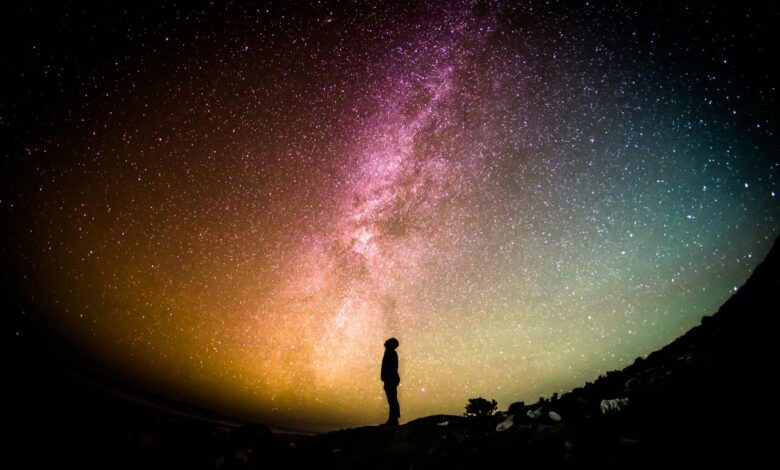
The mystery of our cosmic beginning has fascinated humanity since we first looked up at the glittering night sky. For many decades, scientists relied on limited telescopic data to build theories about how everything we see came into existence.
This traditional era of astronomy often viewed the universe as a static or slowly changing space with a very simple history. However, the emergence of high-resolution space telescopes and advanced particle physics now allows us to look back almost to the moment of the Big Bang.
This transition represents a monumental shift from philosophical guessing to a precise and mathematical understanding of cosmic birth. We are entering an era where the concept of a single universe is being challenged by the staggering possibility of a vast multiverse.
This innovation in thinking addresses the critical challenge of why our physical laws seem so perfectly tuned for the existence of life.
By integrating quantum mechanics with general relativity, we are finally uncovering the hidden layers of reality that exist beyond our visual reach. This article explores the latest scientific theories regarding the origins of the cosmos and the mind-bending evidence for multiple dimensions of existence.
The Big Bang and the Inflationary Epoch
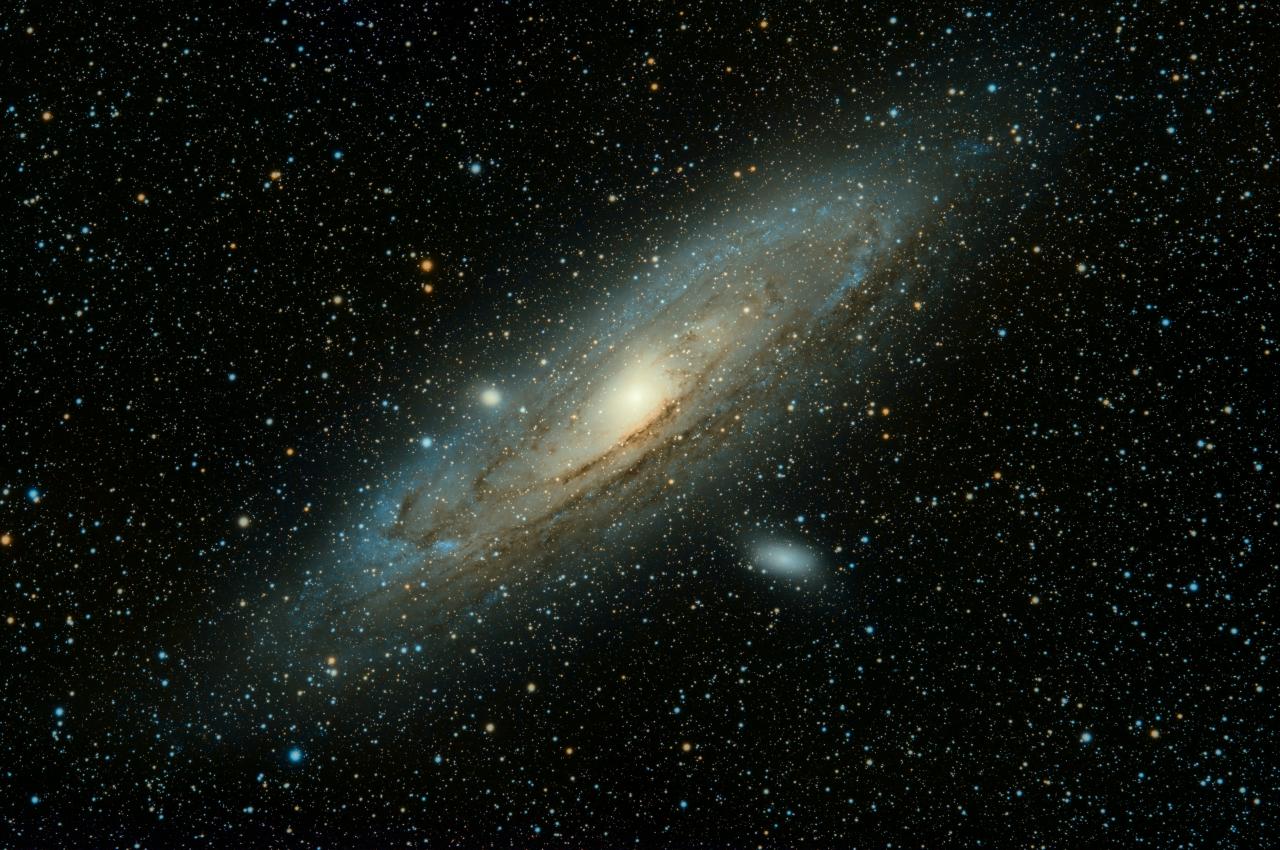
The Big Bang theory remains the gold standard for explaining how our universe expanded from a point of infinite density. During the first trillionth of a second, a process called “cosmic inflation” caused the universe to expand faster than the speed of light.

I believe that “inflationary logic” is the only way to explain why the universe looks so uniform in every direction we point our telescopes.
You solve the problem of the “horizon paradox” by understanding that everything was once connected before the massive expansion pushed things apart. This perspective allows you to see the Big Bang not as an explosion in space, but as a rapid expansion of space itself.
A. Singularity and the Planck Era
At the very beginning, all matter and energy resided in a state of extreme heat and density called a singularity. During this Planck Era, the four fundamental forces of nature likely existed as a single unified force.
It represents the ultimate limit of our current physics where time and space as we know them begin to break down completely.
B. The Cosmic Microwave Background Radiation
About 380,000 years after the Big Bang, the universe cooled enough for light to travel freely across the vast dark space.
This “afterglow” of the Big Bang is still visible today as a faint hum of microwave energy that fills the entire sky. It acts as a cosmic baby picture, revealing the tiny density ripples that eventually grew into the massive galaxies we see now.
C. Nucleosynthesis and the Birth of Elements
In the first few minutes, the intense heat allowed protons and neutrons to fuse into the very first atomic nuclei. This process created the vast majority of the hydrogen and helium that still makes up most of the visible matter in the cosmos.
It laid the chemical foundation for the first stars to ignite and begin the long process of creating more complex elements like carbon and oxygen.
Dark Matter and the Cosmic Web
Visible stars and galaxies only make up a tiny fraction of the total “stuff” that exists in our vast and mysterious universe. Dark matter acts as an invisible gravitational glue that holds galaxies together and prevents them from flying apart as they rotate.
My new perspective is that “invisible scaffolding” is the most accurate way to describe how the universe actually maintains its structure. You solve the problem of missing mass by accepting that there is a type of matter that does not interact with light at all.
This perspective helps you realize that we are living in a universe where the most important components are the ones we cannot even see.
A. The Gravitational Signature of Dark Matter
We know dark matter exists because we can see its gravity bending the light from distant stars, a process known as gravitational lensing.
This effect allows astronomers to map out where the dark matter is hiding even though it remains completely dark to our cameras. It proves that there is a massive amount of hidden material influencing the motion of everything in the night sky.
B. Formation of the Large-Scale Structure
Dark matter clumped together in the early universe, creating a “cosmic web” of filaments that attracted ordinary gas and dust.
Galaxies formed at the intersections of these filaments, creating the massive clusters and superclusters that define our modern cosmic map. This structure ensures that the universe is not just a random mess but a highly organized and interconnected system.
C. The Search for WIMPs and Axions
Scientists are currently using deep underground detectors to try and catch a single particle of dark matter as it passes through the Earth.
These theoretical particles, like Weakly Interacting Massive Particles (WIMPs), could be the key to unlocking the next chapter of physics. Finding these particles would finally bridge the gap between our mathematical models and the physical reality of the dark cosmos.
Dark Energy and the Accelerating Expansion
While dark matter pulls things together, a mysterious force called dark energy is currently pushing the entire universe apart at an accelerating rate. This discovery shocked the scientific community because everyone expected gravity to eventually slow down the expansion of the cosmos.
I suggest that “vacuum energy” is a fundamental property of empty space that exerts a repulsive pressure on everything around it. You solve the problem of the “dying universe” by realizing that the future of the cosmos depends on the strength of this invisible dark energy.
This perspective suggests that our distant descendants will eventually see a sky that is completely dark as other galaxies move away too fast.
A. Type Ia Supernovae as Cosmic Yardsticks
By observing distant exploding stars, astronomers discovered that the universe is expanding much faster today than it was billions of years ago.
These “standard candles” allow us to measure the distance and speed of remote galaxies with incredible precision. It provided the first direct evidence that some unknown force is winning the tug-of-war against the pull of gravity.
B. The Cosmological Constant and Quantum Fluctuations
Einstein originally proposed a “cosmological constant” to keep his equations stable, but he later called it his greatest blunder. Now, it seems he was actually right, as this constant might represent the energy density of the empty vacuum of space.
This energy remains constant even as space expands, meaning the pushing force only gets stronger as the universe grows larger over time.
C. The Big Freeze and the Ultimate Fate
If dark energy continues to dominate, the universe will eventually become so cold and empty that no new stars can ever form again.
This “Big Freeze” scenario describes a slow and silent end to the cosmos where all light eventually fades into the dark. It challenges us to appreciate the current era of the universe where stars are still bright and life is still possible.
The Multiverse and Parallel Realities
The theory of cosmic inflation suggests that our Big Bang might have been just one of many similar events happening in a much larger space. This leads to the “Eternal Inflation” model, where new universes are constantly bubbling into existence like bubbles in a pot of boiling water.
My perspective is that “infinite probability” is the most logical conclusion if our current laws of physics are truly universal. You solve the problem of our “fine-tuned” universe by realizing that in an infinite multiverse, every possible version of reality must exist somewhere.
This perspective turns our universe from a unique miracle into a statistical certainty within a much larger and grander cosmic landscape.
A. Level I and Level II Multiverses
A Level I multiverse consists of regions of space that are simply too far away for us to ever see or reach. A Level II multiverse is more extreme, consisting of separate “bubble universes” that may have entirely different laws of physics and different numbers of dimensions.
This means that in another universe, gravity might be much stronger or the speed of light might be much slower than here.
B. The Many-Worlds Interpretation of Quantum Mechanics
Quantum physics suggests that every time a subatomic choice is made, the universe splits into multiple branches to accommodate every outcome.
This creates a “quantum multiverse” where every decision you have ever made resulted in a different version of your life in a parallel world. It is a mind-bending idea that suggests the reality we experience is just one thin slice of a much larger multi-dimensional cake.
C. String Theory and the Landscape of Branes
String theory proposes that our entire universe exists on a “brane” or a membrane floating in a higher-dimensional space called the “bulk.” When these branes occasionally collide, they can trigger a new Big Bang and create an entirely new universe with its own unique properties.
This provides a physical mechanism for how a multiverse could be generated and maintained over trillions of years.
Black Holes as Gateways to Other Universes
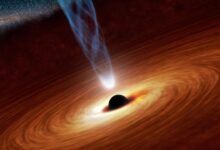
Black holes are regions where gravity is so strong that even light cannot escape their grasp, creating a point of no return called an event horizon. Some theoretical physicists suggest that the “bottom” of a black hole might actually be a “White Hole” that births a new universe.
I believe that “gravitational recycling” is a beautiful way to think about how matter and energy might move through the cosmic system. You solve the problem of the “information paradox” by suggesting that information is not destroyed in a black hole but simply moved to a new reality.
This perspective turns black holes from destructive monsters into the reproductive organs of a much larger and living multiverse.
A. Singularities and Einstein-Rosen Bridges
A wormhole, or Einstein-Rosen bridge, is a theoretical tunnel through space-time that could connect two distant points or even two different universes.
While we have not found one yet, the mathematics of general relativity suggests that these cosmic shortcuts are a real possibility. They represent the ultimate dream of space travel, allowing us to bypass the vast distances that currently keep us trapped in our local solar system.
B. Hawking Radiation and Black Hole Evaporation
Stephen Hawking discovered that black holes are not completely black but actually emit a faint glow of radiation over long periods.
This process causes the black hole to slowly lose mass and eventually disappear in a final and massive burst of energy. It shows that even the most powerful objects in the universe are subject to the laws of thermodynamics and have a limited lifespan.
C. The Holographic Principle and Cosmic Information
Some scientists believe that our entire three-dimensional universe is actually a projection of information stored on a two-dimensional surface at the edge of space.
This “Holographic Principle” suggests that the underlying reality of the cosmos is far more complex and digital than our senses perceive. It provides a radical new way to look at how space, time, and matter are all interconnected at the most fundamental level.
The Anthropic Principle and the Purpose of Life
The Anthropic Principle suggests that the reason the universe appears so perfect for life is simply because we are here to observe it. If the physical constants were even slightly different, stars would never form and life would never have a chance to evolve in the dark.
My new perspective is that “observer-dependent reality” makes humanity a vital part of the cosmic story rather than just a random accident. You solve the problem of cosmic insignificance by realizing that the universe needs conscious minds to witness and understand its beauty.
This perspective gives our existence a sense of cosmic purpose, as we are the “eyes and ears” of the universe experiencing itself.
A. The Goldilocks Complexity of Physical Laws
The strength of gravity and the mass of an electron seem to be set at “just the right” levels to allow for stable atoms and complex chemistry. This precision is so unlikely that many scientists use it as the primary evidence for the existence of a vast and diverse multiverse.
It means we are simply lucky enough to live in one of the few universes that can actually support a complex biological life.
B. The Great Filter and the Search for Others
If the universe is so large and old, many people wonder why we haven’t heard from any other advanced civilizations yet. This “Fermi Paradox” suggests that there might be a “Great Filter” that prevents life from surviving long enough to travel between the stars.
Understanding our cosmic origins helps us realize how rare and precious our civilization truly is in the face of such a vast and silent empty space.
C. The Future of Cosmic Exploration and Understanding
As we build larger telescopes and more powerful particle colliders, we will continue to peel back the layers of the cosmic mystery. Every new discovery about the Big Bang or the multiverse brings us closer to answering the ultimate questions about where we came from.
It is a journey of discovery that unites all of humanity in a shared quest for truth and a deeper understanding of our place in the stars.
Conclusion
Our cosmic origins define the story of everything we know and love today. You must look at the stars to understand your own small place in history. The Big Bang was not the end but a bright and new beginning.
Dark matter and dark energy are the silent masters of our vast universe. You solve the mystery of space by following the light of ancient stars. The multiverse theory suggests that our reality is just one of many worlds.
Parallel universes could hold versions of life that we can only dream of. Black holes are the most mysterious and powerful objects in our dark sky. Quantum physics shows that the small world defines the large and cosmic one.
Every atom in your body was once inside a hot and bright star. We are made of star-stuff and we are a way for the cosmos. Innovation in science allows us to see back to the dawn of time.
Support for space research is a vote for the future of our species. Stay curious about the dark and empty spaces between the distant shining galaxies. The journey to the edge of the universe starts with a single thought.